


What Makes a Vegetable Easy for Beginners?
The easiest vegetables for new gardeners usually have a few things in common:
- They grow quickly from seed or are easy to grow from nursery transplants.
- They do not need complicated pruning, tying or pest management.
- They can grow in raised beds, in-ground gardens or large containers.
- They give you a clear harvest without much guesswork.
- They are forgiving if your spacing, watering or timing is not perfect.
Before planting, pay attention to two basic timing groups: cool-season vegetables and warm-season vegetables. Cool-season vegetables, such as lettuce, peas and radishes, prefer spring and fall weather. Warm-season vegetables, such as tomatoes, beans, cucumbers and zucchini, should be planted after frost danger has passed and the soil has warmed. For exact timing, use your local frost dates and planting calendar rather than guessing from a national article.

For exact timing, use your local frost dates and planting calendar rather than guessing from a national article. The USDA Plant Hardiness Zone Map is useful background, but annual vegetable planting depends more on local frost dates, soil temperature and seasonal weather than on zone alone.
The Best Vegetables to Grow if You’ve Never Gardened Before
1. Radishes
Radishes are one of the fastest vegetables you can grow, which makes them perfect for impatient beginners. Many varieties are ready to harvest in about three to five weeks, depending on the variety and weather. Plant radish seeds directly in loose soil in spring or fall. They do not need to be started indoors, and they do not need much space. A small row, raised bed corner or container can produce a quick harvest. Beginner tip: Sow a small batch every week or two during cool weather instead of planting the whole packet at once. Radishes can become woody or overly spicy if left in the ground too long.
The University of Minnesota Extension guide to growing radishes notes that garden radishes are usually ready to harvest three to five weeks after planting, which is why they are one of the best first crops for beginners.
2. Leaf Lettuce
Leaf lettuce is easier than head lettuce because you do not have to wait for a tight head to form. You can harvest outer leaves as the plant grows, giving you several small harvests instead of one all-or-nothing crop. Lettuce grows best in cool weather. In many climates, spring and fall are better than midsummer. In hot weather, lettuce can bolt, which means it sends up a flower stalk and turns bitter. Beginner tip: Choose loose-leaf or baby leaf lettuce mixes. They grow quickly, work well in containers and are much more forgiving than iceberg-type lettuce.
3. Bush Beans
Bush beans are one of the best warm-season vegetables for beginners because they grow quickly from seed and do not require a trellis. Unlike pole beans, bush beans stay compact and are easier to manage in a small garden. Plant bean seeds directly in the garden after frost danger has passed and the soil is warm. Beans do not like being transplanted, so skip indoor seed starting. Beginner tip: Pick beans when they are young and tender. The more consistently you harvest, the more productive many plants will be.
4. Cherry Tomatoes
Tomatoes are not the absolute easiest vegetable crop, but cherry tomatoes are one of the best first tomato choices. They usually produce more reliably than large slicing tomatoes, and the small fruits ripen quickly. For your first year, buy healthy tomato transplants instead of starting from seed. Plant them in full sun, give them a cage or stake, and water consistently. Inconsistent watering can lead to cracking, blossom-end rot and stressed plants. Beginner tip: Choose a disease-resistant cherry tomato variety. One or two plants are enough for a first garden.
5. Zucchini and Summer Squash
Zucchini has a reputation for overwhelming gardeners with produce, which is exactly why it belongs on a beginner list. If it has sun, warmth, space and pollination, one healthy zucchini plant can produce a lot. The main mistake beginners make is planting too many. Zucchini plants get large. Give each plant room to spread and avoid crowding the leaves, which can encourage disease. Beginner tip: Start with one plant, not six. Harvest zucchini when it is small to medium-sized. Oversized zucchini are less tender and can slow future production.
6. Cucumbers
Cucumbers are a good beginner vegetable if you give them warmth, water and something to climb. They can be grown on a trellis to save space, improve airflow and make harvesting easier. Plant cucumber seeds directly outdoors after frost danger has passed, or use young transplants if your growing season is short. They need consistent moisture, especially once fruit begins forming. Beginner tip: Look for bush cucumber varieties if you are growing in containers or small raised beds.
7. Peas
Peas are a strong choice for early spring because they like cool weather. They are also satisfying for beginners because the seeds are large and easy to handle. Plant peas directly in the garden as soon as the soil can be worked in spring. Many types need a small trellis or support, but they are not difficult to grow. Beginner tip: Sugar snap peas are especially rewarding because you can eat the whole pod.
8. Green Onions
Green onions, also called scallions, are excellent for beginners because they take up very little space and are useful in the kitchen. They can grow in containers, raised beds or tucked along the edge of a vegetable garden. You can grow them from seed, sets or starter plants. They do not demand much space and can be harvested gradually. Beginner tip: Plant green onions near lettuce, carrots or other compact crops to make better use of limited garden space.
9. Swiss Chard
Swiss chard is one of the most forgiving leafy greens. It tolerates more heat than spinach and can produce leaves over a long season if you harvest it correctly. Harvest the outer leaves and allow the center of the plant to keep growing. This cut-and-come-again habit makes chard useful for small gardens. Beginner tip: If you struggle with lettuce in hot weather, try Swiss chard as a more durable leafy green.
10. Carrots
Carrots are not difficult, but they do need loose, stone-free soil. Heavy clay or compacted soil can cause crooked or stunted roots. That does not make them a bad beginner crop; it just means you need to plant them in the right place. Grow carrots from seed directly in the garden. Do not transplant them. Keep the soil evenly moist while seeds germinate, because carrot seeds can be slow to sprout. Beginner tip: Choose shorter carrot varieties if your soil is shallow or if you are growing in containers.
Best Vegetables for Containers
You do not need a large yard to grow vegetables. Many beginner-friendly crops grow well in containers as long as the pot is large enough, has drainage holes and receives enough sunlight. The University of Maryland Extension guide to growing vegetables in containers lists salad greens, tomatoes, beans, chard, radishes, squash and cucumbers among popular container crops.
- Best small-container choices: lettuce, radishes, green onions and herbs.
- Best medium-container choices: bush beans, Swiss chard and compact peppers.
- Best large-container choices: cherry tomatoes, bush cucumbers and compact zucchini varieties.
Use potting mix, not heavy garden soil, in containers. Container plants dry out faster than plants in the ground, so check moisture often during hot weather.
Best Vegetables for Raised Beds
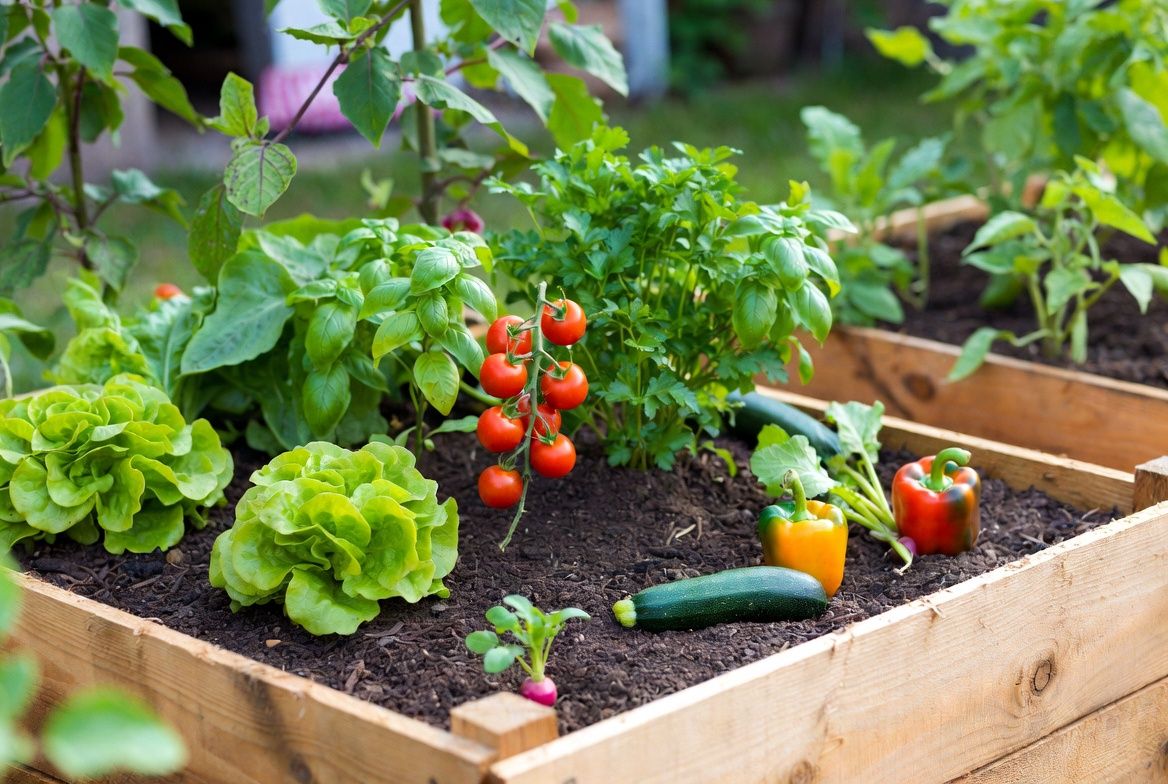
Raised beds are ideal for first-time gardeners because they make it easier to control soil quality, drainage and spacing. A single 4-by-8-foot raised bed can grow a useful beginner garden without becoming overwhelming. A strong first-year raised bed could include:
- One cherry tomato plant
- One cucumber plant on a trellis
- One zucchini plant, if the bed has enough room
- A short row of bush beans
- A section of lettuce or Swiss chard
- A few radishes or green onions along the edges
Do not overcrowd the bed. Crowding looks productive at first, but it creates competition for water, reduces airflow and can make disease problems worse.
Use Flowers to Help Your Vegetable Garden
Vegetable gardens do better when pollinators show up. Cucumbers, zucchini and squash especially benefit from bees and other pollinating insects moving between flowers. Adding flowers near your vegetable garden can help attract pollinators and beneficial insects. If you want a more wildlife-friendly yard, start with this guide on how to start a butterfly garden and this list of the best native wildflowers for a pollinator garden. Coneflowers are also a strong choice around edible gardens because they are tough, attractive and pollinator-friendly. Learn more in this guide on how to grow coneflowers. To keep flowering plants blooming longer, regular maintenance matters. This guide explains how to deadhead flowers the right way.
Beginner Vegetable Garden Planting Plan
If you have never gardened before, use this simple planting plan instead of buying every seed packet that looks good.
Early Spring or Fall
- Radishes
- Leaf lettuce
- Peas
- Swiss chard
- Carrots
- Green onions
After Frost Danger Has Passed
- Bush beans
- Cherry tomatoes
- Cucumbers
- Zucchini or summer squash
This split matters. Planting warm-season vegetables too early is one of the fastest ways to fail. Tomatoes, cucumbers, beans and squash do not want cold soil or freezing nights.
What Not to Grow in Your First Garden
Some vegetables are worth growing eventually, but they are not the smartest first-year choices. They may need more space, better timing, more pest control or more experience.
- Corn: Needs space and multiple plants for good pollination.
- Melons: Need heat, room, consistent moisture and a long season.
- Cauliflower: Fussy about temperature and timing.
- Brussels sprouts: Slow-growing and often pest-prone.
- Celery: Needs steady moisture and a long growing period.
- Large pumpkins: Fun, but they take over small gardens fast.
These are not impossible crops. They are just not where a beginner should start if the goal is a reliable first harvest.
Companion Planting for Beginner Vegetable Gardens
Companion planting can help you plan a more efficient garden, but do not overcomplicate it. For beginners, the most useful companion planting rule is simple: place plants together when they have similar sun, water and spacing needs. For example, lettuce can grow near taller crops that provide light afternoon shade, while sprawling zucchini should not be crammed into a tight bed with plants that need good airflow. For a deeper guide, read Companion Planting: Which Vegetables Grow Better Together.
Beginner Mistakes That Ruin Vegetable Gardens
Planting Too Much
The biggest first-garden mistake is ambition. A beginner does not need twenty crops. Start with five to eight vegetables and learn how they grow.
Ignoring Sunlight
Most fruiting vegetables, including tomatoes, cucumbers, beans and squash, need full sun to produce well. Leafy greens can tolerate more partial shade, especially in hot weather.
Watering Shallowly
Frequent shallow watering encourages weak roots. Water deeply and consistently, then let the soil surface begin to dry slightly before watering again. Containers need more frequent checks than in-ground beds.
Skipping Soil Basics
Vegetables grow best in healthy, well-drained soil with organic matter. If your garden has struggled before, a soil test can tell you whether pH or nutrient issues are holding plants back. For broader soil health basics, the USDA Natural Resources Conservation Service soil health guide explains why soil is a living resource, not just inert dirt.
Waiting Too Long to Harvest
Many beginner vegetables taste best when harvested young. Radishes, beans, cucumbers and zucchini can decline in quality if left too long.
Frequently Asked Questions About Beginner Vegetables
What is the easiest vegetable to grow for beginners?
Radishes are often the easiest vegetable for beginners because they sprout quickly, grow fast and do not need much space. Leaf lettuce, bush beans and green onions are also excellent first crops.
Should beginners start vegetables from seed or buy plants?
Use both. Direct sow radishes, lettuce, peas, beans, carrots and cucumbers. Buy transplants for tomatoes and peppers, especially in your first year.
Can I grow vegetables without a backyard?
Yes. Lettuce, radishes, green onions, bush beans, cherry tomatoes and compact cucumbers can grow in containers if they receive enough sunlight and the containers have drainage holes.
How much sun does a beginner vegetable garden need?
Most vegetables need at least six hours of direct sun. Fruiting crops such as tomatoes, beans, squash and cucumbers usually perform best with more. Leafy greens can handle some partial shade.
What vegetables grow the fastest?
Radishes, baby lettuce, green onions and some leafy greens are among the fastest beginner vegetables. Beans and cucumbers take longer but still produce relatively quickly in warm weather.
What should I plant in my first vegetable garden?
A smart first garden includes radishes, lettuce, bush beans, cherry tomatoes, cucumbers, green onions and one zucchini plant. That mix gives you fast harvests, fresh salads and warm-season crops without making the garden too complicated.
The Bottom Line
The best vegetables to grow if you have never gardened before are not the flashiest crops. They are the crops that teach you the basics: timing, watering, sunlight, spacing and harvesting. Start with radishes, lettuce, bush beans, cherry tomatoes, cucumbers, peas, green onions, Swiss chard, carrots and one zucchini plant. Keep the garden small, plant at the right season and harvest often. That is how a first garden becomes a second garden instead of a one-time disappointment.
Share this article

Hi, I’m Andrew — the passionate backyard enthusiast behind Butterflies, Birds & Blooms.
I’m not a biologist, master gardener, or certified expert by any stretch. I’m simply someone who fell in love with the magic that happens right outside my own back door. There’s nothing quite like spotting the first monarch of the season, hearing the cheerful chatter of birds at the feeder, or watching flowers bloom and bring life to the garden.
What started as a personal hobby quickly grew into a desire to share the joy, simple tips, and everyday wonders of creating a backyard that welcomes butterflies, birds, and beautiful blooms. Whether you’re a complete beginner or a seasoned nature lover, this little corner of the internet is for all of us who find peace, wonder, and happiness in our gardens.
You’ll find practical gardening ideas, seasonal observations, canning adventures from the “Bushel Basket,” and plenty of real-life stories from my own yard on a steep hill just outside Nashville. No fancy jargon, no gatekeeping — just genuine love for nature and a community of like-minded folks.
Join me as we learn together, celebrate the small wins, and make our backyards a little more alive with butterflies, birds, and blooms.

Join the discussion
Sign in to join the discussion
Comments are open to BBB members. Sign in to your free account to share your experience, ask questions, and reply to other readers.
Free to join. No credit card. Founding Member badge for the first 500 spots.