

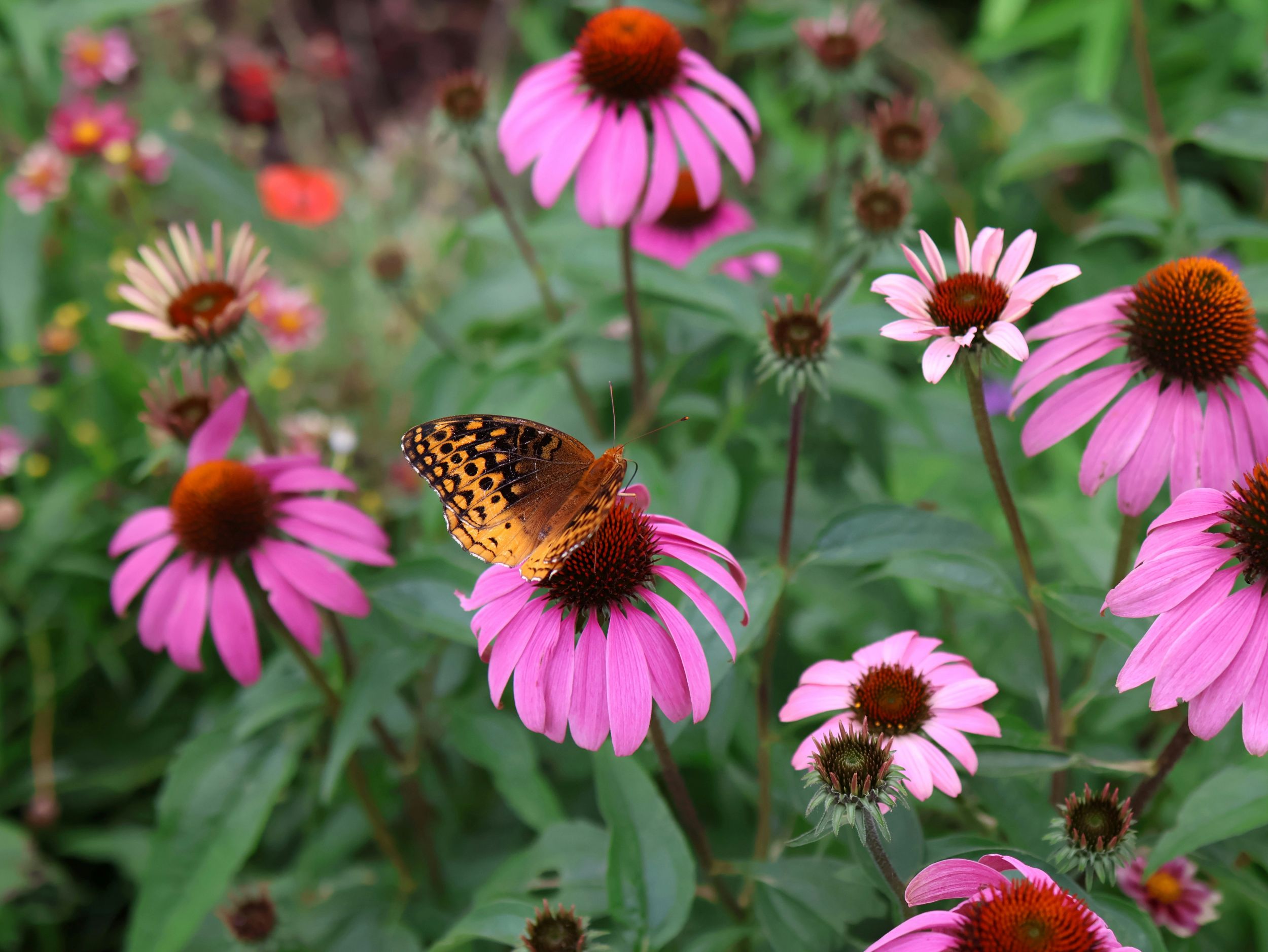

Learning how to grow coneflowers is one of the easiest ways to make a sunny garden more attractive to butterflies, bees, beneficial insects, and seed-eating birds. Coneflowers are tough native perennials with bold daisy-like blooms, raised cone centers, long-lasting seed heads, and a forgiving nature that makes them ideal for beginner and experienced gardeners alike. They are not the flashiest plant in the pollinator garden, and that is exactly why they matter. Coneflowers provide structure, summer nectar, late-season seeds, and reliable color when many spring flowers have faded. Plant them in full sun, avoid soggy soil, and leave at least some seed heads standing for birds.
Coneflower Quick Care Guide
| Common name | Coneflower, purple coneflower |
| Botanical name | Echinacea spp. |
| Plant type | Herbaceous perennial |
| Best light | Full sun; part shade tolerated in many regions |
| Soil | Average, well-drained soil |
| Water needs | Moderate while establishing; drought tolerant once established |
| Bloom time | Summer into early fall, depending on species and climate |
| Wildlife value | Bees, butterflies, beneficial insects, and seed-eating birds |
| Deer resistance | Deer-resistant, not deer-proof |
Why Coneflowers Belong in a Pollinator Garden
Coneflowers earn their place because they do more than look pretty. The open, single blooms make it easy for bees and butterflies to reach nectar and pollen. After the petals fade, the cone-shaped centers ripen into seed heads that attract birds, especially finches. For a pollinator garden, that matters. A good garden is not just a flower display. It is a food source across the season. Coneflowers help bridge the gap between early summer bloomers and late-season workhorses like asters, goldenrod, and native sunflowers. They also solve a practical problem: many homeowners want pollinator plants that do not need constant watering, staking, fertilizing, or pampering. Established coneflowers can handle heat, humidity, and dry spells better than many ornamental perennials.
Best Types of Coneflowers to Grow
The most common coneflower is purple coneflower, Echinacea purpurea. It is widely available, adaptable, and a strong choice for sunny borders, meadow-style plantings, cottage gardens, and pollinator beds. Other native coneflowers worth considering include:

- Purple coneflower (Echinacea purpurea): The easiest to find and usually the best starter choice.
- Pale purple coneflower (Echinacea pallida): Has long, narrow, drooping petals and a graceful prairie look.
- Narrowleaf coneflower (Echinacea angustifolia): A drought-tolerant species suited to leaner prairie-style plantings.
- Tennessee coneflower (Echinacea tennesseensis): A regional native with upturned pink-purple petals; especially interesting for gardeners in Tennessee and nearby areas.
- Yellow coneflower (Echinacea paradoxa): A yellow-flowered native species that adds color variation while still keeping the wildflower look.
For maximum pollinator value, start with straight species or simple, single-flowered cultivars. Highly altered double coneflowers may look showy, but they often make nectar and pollen harder for insects to access.
Where to Plant Coneflowers
Plant coneflowers where they get at least six hours of sun per day. They can tolerate some part shade, especially in hot climates, but too much shade usually means fewer flowers, weaker stems, and plants that lean toward the light. Good places to plant coneflowers include:
- Sunny pollinator gardens
- Native plant borders
- Meadow-style garden beds
- Front-yard perennial beds
- Along fences or sunny property lines
- Near vegetable gardens to help attract pollinators
Coneflowers can also work near vegetable beds because they bring in bees and other beneficial insects. If you are planning a food garden too, use them alongside smart companion planting choices instead of treating flowers and vegetables as separate projects. Avoid low, wet spots where water sits after rain. Coneflowers are tough, but they do not like constantly soggy roots.
How to Plant Coneflowers
The best time to plant coneflowers is spring or early fall. Spring planting gives roots a full growing season to settle in before winter. Fall planting works well too, as long as you plant early enough for roots to establish before hard freezes.
- Choose a sunny site. Full sun gives the strongest flowering and best plant shape.
- Loosen the soil. Coneflowers do not need rich soil, but compacted soil should be loosened before planting.
- Plant at the same depth. Keep the crown level with the surrounding soil.
- Space plants properly. Most coneflowers need about 18 to 24 inches between plants, depending on variety.
- Water deeply after planting. Keep the soil lightly moist while roots establish.
- Mulch lightly. Use mulch to conserve moisture, but do not bury the crown.
Do not over-improve the soil. Rich soil and heavy fertilizer can push soft, floppy growth instead of strong stems and abundant flowers.
How Much Water Do Coneflowers Need?
Newly planted coneflowers need consistent moisture while they establish. Water deeply when the top inch or two of soil feels dry. Once established, coneflowers are fairly drought tolerant and usually perform well with normal rainfall in many regions. The mistake is shallow daily watering. That encourages weak roots near the soil surface. Water less often but more deeply, especially during hot, dry weather.
Should You Fertilize Coneflowers?
Usually, no. Coneflowers grow best in average soil. Heavy fertilizer can make the plants tall, weak, and more likely to flop. If your soil is extremely poor, add compost at planting time, but skip routine high-nitrogen fertilizer. If your coneflowers are producing lots of leaves but few flowers, the problem is often too much shade, too much fertilizer, or both.
Deadheading Coneflowers: Should You Cut Off Spent Blooms?
Deadheading coneflowers can make the garden look tidier and may encourage additional blooms. But for a wildlife garden, do not deadhead every flower. Leave at least some seed heads standing in late summer and fall. Birds will feed on the seeds, and the stiff stems add winter texture to the garden. A good compromise is to deadhead the earliest faded flowers for rebloom, then leave the later seed heads for birds.
When to Cut Back Coneflowers
You can cut coneflowers back in late fall, but spring cleanup is better for wildlife. Leaving stems and seed heads through winter provides food, cover, and structure. In spring, cut old stems back once new growth appears at the base. If you want to be more pollinator-friendly, leave some hollow stems standing 12 to 18 inches tall rather than cutting everything flush to the ground.
Do Coneflowers Spread?
Coneflowers can slowly spread by clumping and may self-seed if you leave seed heads in place. They are not usually aggressive in a typical garden bed. Seedlings are easy to move or remove when small. If you want more plants, allow some flowers to go to seed. If you want a cleaner, more controlled border, deadhead more of the spent blooms before seeds mature.
How to Divide Coneflowers
Coneflowers do not need frequent division. In fact, they often resent being disturbed too often. Divide them only when clumps become crowded, flowering declines, or you want to move part of the plant elsewhere. The best time to divide coneflowers is spring, just as new growth begins. Dig the clump carefully, separate healthy sections with roots attached, and replant immediately. Water well until the divisions settle in.
Growing Coneflowers From Seed
Coneflowers can be grown from seed, but they may not bloom heavily in their first year. Many species germinate better after a period of cold, moist conditions, which is why fall sowing is often effective. To grow coneflowers from seed:
- Sow seeds outdoors in fall, or cold-stratify them before spring planting.
- Press seeds lightly into the soil and cover thinly.
- Keep the seedbed moist but not wet.
- Thin seedlings so mature plants have enough airflow.
Seed-grown plants may vary, especially if they came from hybrid cultivars. For predictable color and height, buy named plants. For a naturalistic pollinator planting, seed variation can be a benefit.
Best Companion Plants for Coneflowers
Coneflowers look best when planted with other sun-loving perennials that bloom before, during, and after their main season. This creates a garden that feeds pollinators for more than a few weeks. Strong companion plants include:
- Bee balm: Adds bright midsummer flowers and attracts hummingbirds, bees, and butterflies.
- Black-eyed Susan: Blooms around the same season and creates a strong yellow-and-purple combination.
- Milkweed: Essential for monarch caterpillars and valuable for many pollinators.
- Blazing star: Tall purple flower spikes that pair well with coneflower shapes.
- Coreopsis: A cheerful native flower for sunny, dry-to-average beds.
- Goldenrod: A late-season powerhouse for bees and beneficial insects.
- Asters: Extend pollinator value into fall.
- Native grasses: Add movement, winter interest, and habitat structure.
For the best effect, plant coneflowers in groups of three, five, or more instead of scattering single plants around the yard. Pollinators find larger flower groupings more easily.
Common Coneflower Problems
Powdery Mildew
Powdery mildew can appear as white or grayish patches on leaves, especially in humid weather or crowded plantings. Improve airflow by spacing plants properly and avoiding overhead watering.
Floppy Stems
Flopping is usually caused by too much shade, overly rich soil, or excessive fertilizer. Move plants to more sun and avoid feeding them heavily.
Few Flowers
If coneflowers produce few blooms, check sunlight first. They need strong sun to flower well. Overfertilizing can also cause leafy growth at the expense of flowers.
Chewed Petals or Leaves
Some insect feeding is normal in a wildlife garden. Do not rush to spray. Coneflowers are meant to support insect life, and minor chewing rarely harms the plant long-term.
Deer Damage
Coneflowers are often listed as deer resistant, but hungry deer may still browse them. Young plants are most vulnerable. Use temporary protection if deer pressure is heavy in your yard.
Are Coneflowers Good for Butterflies?
Yes. Coneflowers are excellent nectar plants for many adult butterflies. Their broad landing surface and open flower structure make them easy for butterflies to use. They are also useful plants if your goal is to see more of the most beautiful butterflies in North America visiting your yard. However, coneflowers are nectar plants, not major butterfly host plants. That means they feed adult butterflies, but they are not the main plant where most butterfly caterpillars develop. For a stronger butterfly garden, combine coneflowers with host plants such as milkweed, parsley, dill, fennel, violets, native grasses, and trees or shrubs that support caterpillars. For a broader habitat plan, see this guide on how to start a butterfly garden.
Are Coneflowers Good for Bees?
Coneflowers attract many bees, especially when planted in sunny groups. Native bees, bumblebees, and honeybees may all visit the blooms. For bees, choose single-flowered coneflowers over double-flowered novelty types. The more the flower looks like a classic coneflower, the more useful it is likely to be.
Are Coneflowers Good for Birds?
Yes, especially when you leave the seed heads standing. Goldfinches and other seed-eating birds may pick at dried coneflower heads in late summer, fall, and winter. If goldfinches are a major goal in your yard, coneflowers can support the same bird-friendly strategy as offering fresh nyjer seed in the right feeder. Here is what to check if nyjer seed is not attracting goldfinches. Coneflowers should not replace feeders, water, shrubs, and trees, but they add natural food to the landscape. For a stronger bird-friendly backyard, pair seed-producing plants with the right bird feeder for your backyard.
Are Coneflowers Native?
The Echinacea genus is native to North America, but not every coneflower species is native to every state or region. For the strongest ecological value, choose species native to your region when possible. That does not mean every cultivar is useless. Some simple, single-flowered cultivars still attract pollinators. But if your goal is a serious wildlife garden, make straight species and regionally appropriate natives the foundation, then use ornamental cultivars as accents.
Best Coneflowers for a Wildlife Garden
For a pollinator-first garden, prioritize these traits:
- Single flowers, not double pom-pom blooms
- Open centers that insects can access
- Strong stems that do not flop
- Good disease resistance
- Seed heads that remain useful for birds
- Species or cultivars suited to your region
Avoid building the entire bed around highly bred novelty coneflowers. Some orange, red, green, and double varieties are attractive to people but weaker for pollinators. They can still have a place, but they should not be the backbone of a pollinator garden.
Can You Grow Coneflowers in Containers?
Yes, but containers are not the best long-term home for most coneflowers. They prefer room for roots and consistent drainage. If you grow coneflowers in pots, choose a compact variety, use a container with drainage holes, and do not let the soil stay soggy. In cold climates, container-grown coneflowers are more exposed to freeze-thaw cycles than plants in the ground. A large pot is better than a small one.
How to Use Coneflowers in Garden Design
Coneflowers work best as mid-border plants. Their flowers rise above lower plants, but they are usually not tall enough to hide fences or form a privacy screen. Use them in repeated groups through a sunny bed. Pair their rounded cones with vertical flowers like blazing star, salvia, or Culver’s root. Add fine-textured plants such as grasses, yarrow, or threadleaf coreopsis to keep the planting from looking heavy. For a natural look, avoid planting them in a stiff single row. Coneflowers look better in loose drifts, especially with other native perennials woven around them. Place a few clumps near a path, patio, or seating area if you want easier chances to watch and photograph butterflies in your garden.
Seasonal Coneflower Care Calendar
Spring
Cut back old stems if you left them standing through winter. Plant new coneflowers after the soil begins warming. Divide crowded clumps only if needed.
Summer
Enjoy peak bloom. Water new plants during dry spells. Deadhead some spent blooms if you want a tidier look or a longer bloom period.
Fall
Stop deadheading if you want seed heads for birds. Plant new coneflowers early enough for roots to establish before winter.
Winter
Leave seed heads standing for birds and winter interest. Avoid cutting the garden too clean if your goal is wildlife habitat.
Frequently Asked Questions About Growing Coneflowers
Do coneflowers come back every year?
Yes. Coneflowers are perennials, so healthy plants return year after year in suitable growing conditions.
Do coneflowers need full sun?
Full sun is best. Some coneflowers tolerate part shade, but too much shade usually reduces flowering and weakens stems.
How long do coneflowers bloom?
Most coneflowers bloom for several weeks in summer. Some continue into early fall, especially if early spent blooms are removed.
Should I deadhead coneflowers?
Deadhead some flowers if you want more bloom and a cleaner look. Leave some seed heads for birds.
Are coneflowers invasive?
No, coneflowers are not usually invasive. They may self-seed, but seedlings are typically easy to manage.
Do birds eat coneflower seeds?
Yes. Goldfinches and other seed-eating birds may visit dried coneflower seed heads, especially in late summer, fall, and winter.
Are coneflowers deer resistant?
They are deer resistant, not deer-proof. Deer may still eat young plants or browse flowers when other food is limited.
Why are my coneflowers falling over?
Floppy coneflowers are usually growing in too much shade, overly rich soil, or with too much fertilizer. Move them to more sun and avoid heavy feeding.
The Bottom Line on Growing Coneflowers
Coneflowers deserve their reputation as one of the backbone plants of the pollinator garden. They are beautiful, practical, drought tolerant once established, useful to butterflies and bees, and valuable to birds when the seed heads are left standing. For the best results, plant them in full sun, give them well-drained soil, avoid overfertilizing, and choose single-flowered types when pollinators are the priority. Do that, and coneflowers will become one of the most dependable plants in your garden.
Share this article

Hi, I’m Andrew — the passionate backyard enthusiast behind Butterflies, Birds & Blooms.
I’m not a biologist, master gardener, or certified expert by any stretch. I’m simply someone who fell in love with the magic that happens right outside my own back door. There’s nothing quite like spotting the first monarch of the season, hearing the cheerful chatter of birds at the feeder, or watching flowers bloom and bring life to the garden.
What started as a personal hobby quickly grew into a desire to share the joy, simple tips, and everyday wonders of creating a backyard that welcomes butterflies, birds, and beautiful blooms. Whether you’re a complete beginner or a seasoned nature lover, this little corner of the internet is for all of us who find peace, wonder, and happiness in our gardens.
You’ll find practical gardening ideas, seasonal observations, canning adventures from the “Bushel Basket,” and plenty of real-life stories from my own yard on a steep hill just outside Nashville. No fancy jargon, no gatekeeping — just genuine love for nature and a community of like-minded folks.
Join me as we learn together, celebrate the small wins, and make our backyards a little more alive with butterflies, birds, and blooms.

Join the discussion
Sign in to join the discussion
Comments are open to BBB members. Sign in to your free account to share your experience, ask questions, and reply to other readers.
Free to join. No credit card. Founding Member badge for the first 500 spots.