
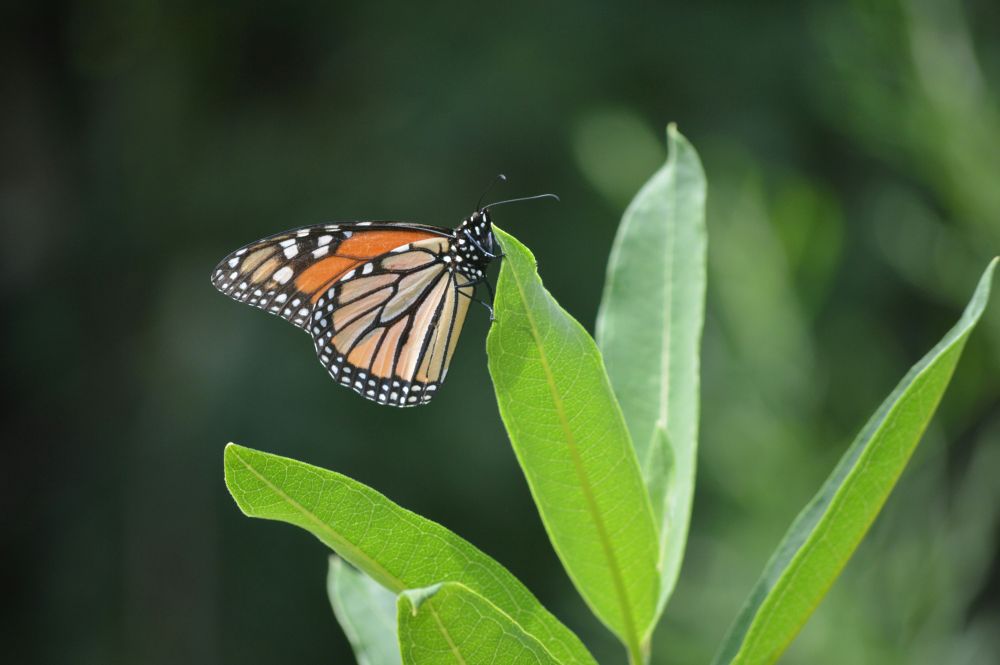

Some butterflies are beautiful because of their color. Others stand out because of their shape, migration, rarity, or the way they appear suddenly in a backyard garden. The most beautiful butterflies in North America are not just pretty insects passing through. Many are tied closely to native trees, wildflowers, vines, and host plants that support their full life cycle. This guide highlights some of the most striking butterflies found across North America, with simple identification tips and practical advice for attracting them to your yard.
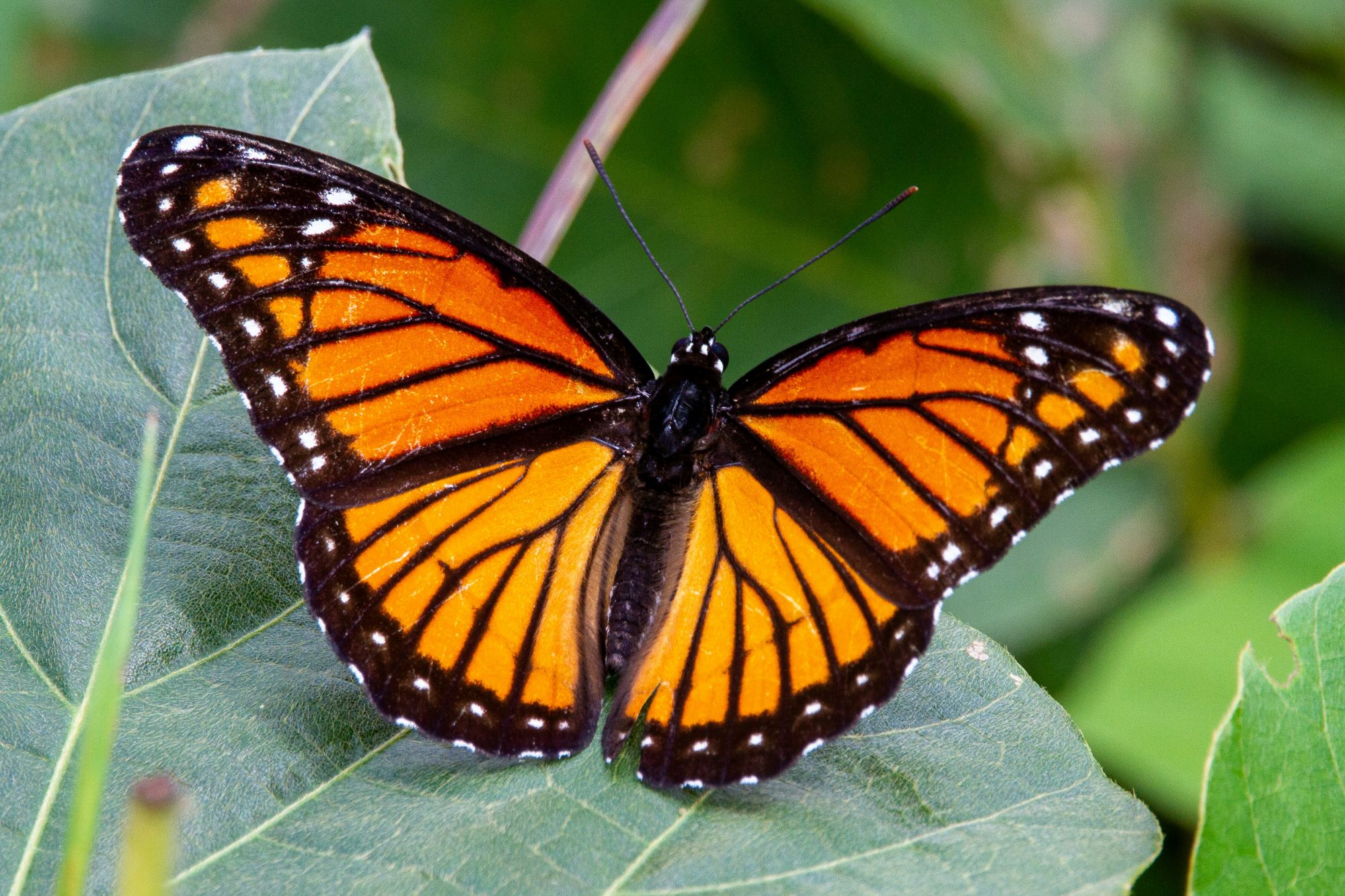
1. Monarch Butterfly
The monarch is one of the most recognizable butterflies in North America. Its orange wings, black veins, and white-spotted borders make it easy to identify, even from a distance. Monarchs are especially famous for their long migration, with eastern populations overwintering in mountain forests in Mexico. To attract monarchs, plant native milkweed for caterpillars and nectar-rich flowers for adults. Milkweed is not optional for monarch reproduction; it is the plant their caterpillars need. Good garden choices include swamp milkweed, butterfly weed, and common milkweed where appropriate for your region. Garden tip: Pair milkweed with late-season nectar plants such as asters, goldenrod, blazing star, coneflower, and Joe-Pye weed so migrating adults have fuel in late summer and fall.
2. Eastern Tiger Swallowtail
The eastern tiger swallowtail is large, bright, and dramatic. Most males are yellow with bold black tiger-like stripes, while females may be yellow or dark. The blue markings near the hindwings make females especially striking. This butterfly is common in many eastern North American landscapes, especially near woodland edges, gardens, parks, and flowering trees. Caterpillars use several native trees as host plants, including tulip tree, wild cherry, ash, and magnolia. Garden tip: If you have room for trees, a tulip tree or native cherry can support swallowtail caterpillars while also feeding birds and other wildlife.

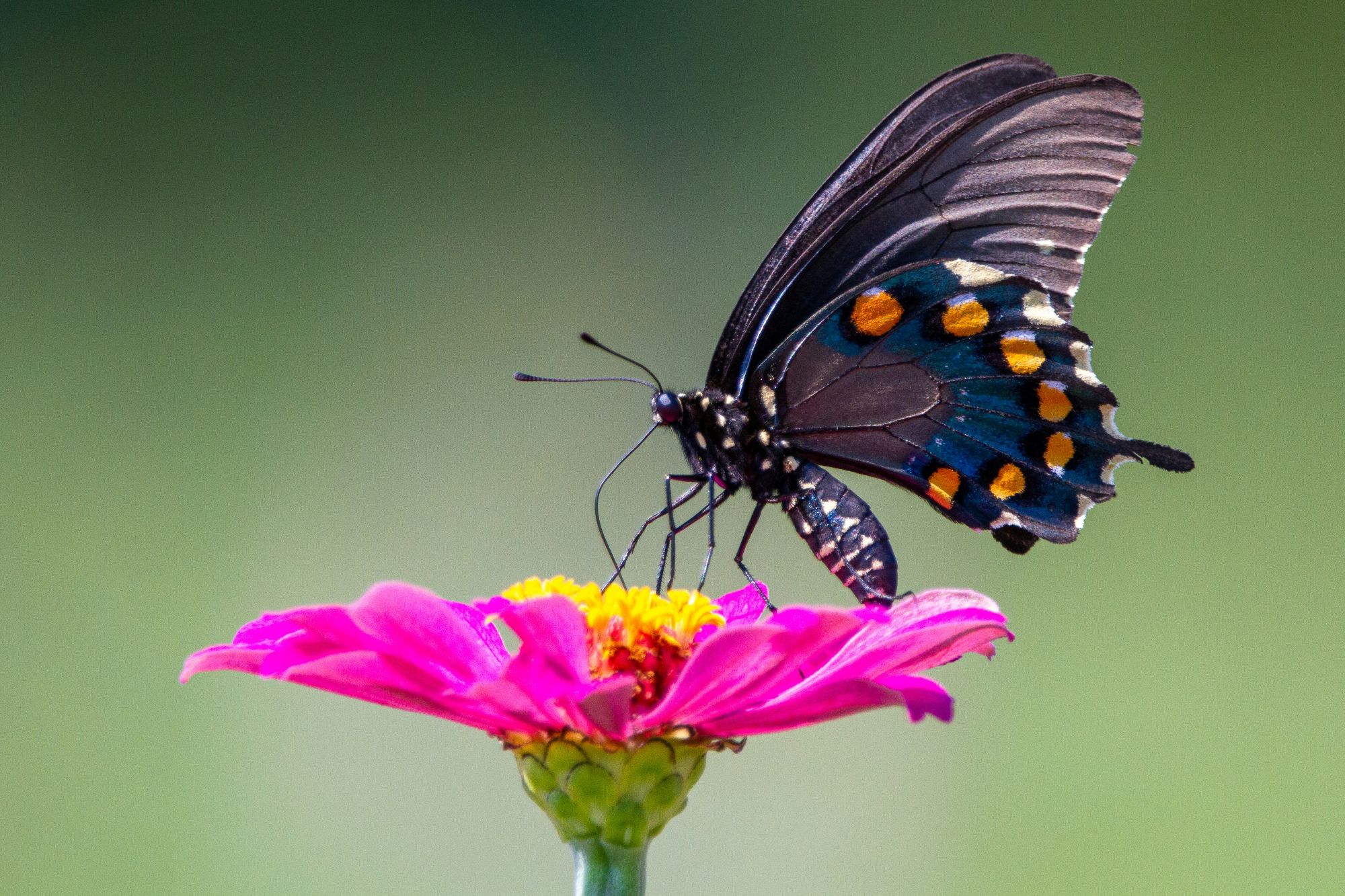
3. Pipevine Swallowtail
The pipevine swallowtail looks almost tropical, with dark wings and shimmering blue or blue-green hindwings. Its beauty comes with a warning: this butterfly depends on pipevine plants in the genus Aristolochia for its caterpillars. Adult pipevine swallowtails visit many flowers for nectar, but females need the correct host plant before they can reproduce. Native pipevine species are the safest choice. Avoid ornamental tropical pipevines that may not properly support native caterpillars. Garden tip: Plant native pipevine only if it is appropriate for your region and space. Some species are vigorous vines and need a sturdy arbor, fence, or trellis.
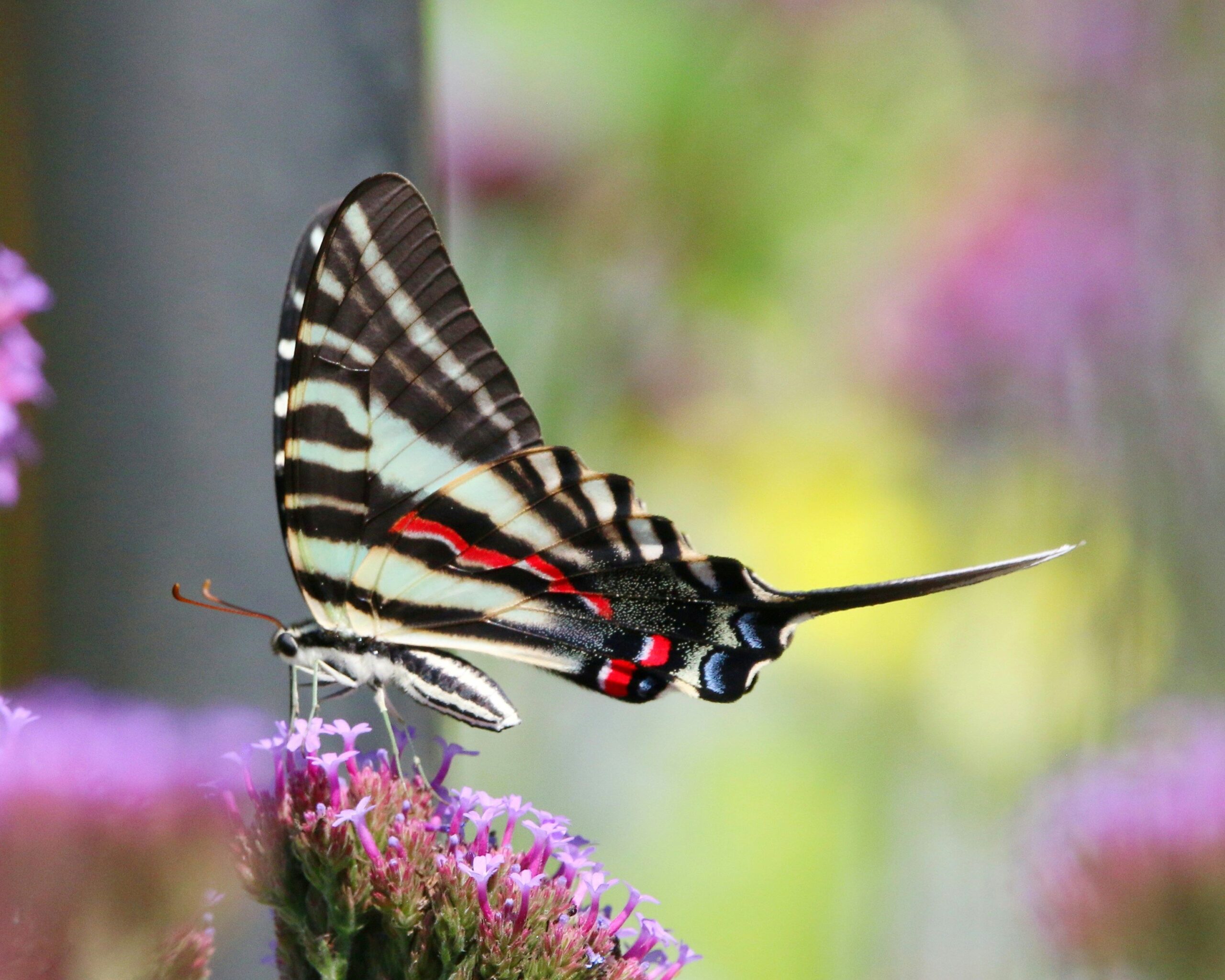
4. Zebra Swallowtail
The zebra swallowtail is one of the most elegant butterflies in North America. It has white wings with bold black stripes, long tails, and red accents near the hindwings. It is closely tied to pawpaw trees, which are the main host plant for its caterpillars. You are most likely to see zebra swallowtails in moist woodlands, stream edges, and areas where pawpaw grows naturally. In the garden, planting pawpaw can help support this species while also adding a native fruiting tree to the landscape. Garden tip: Pawpaw often grows best in rich, moist soil with some protection when young. Plant more than one tree if fruit production is also a goal.
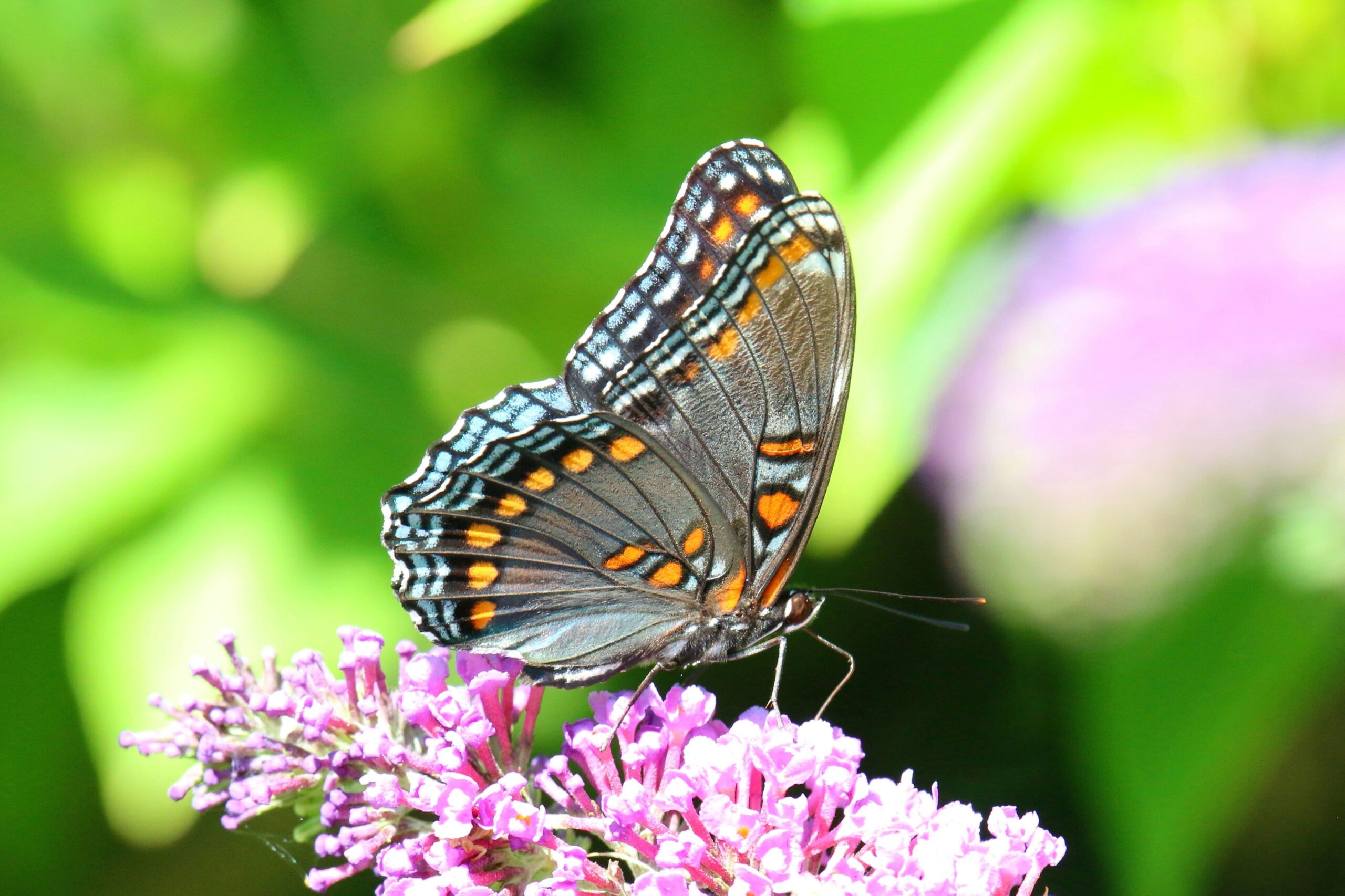
5. Red-Spotted Purple
The red-spotted purple is a dark, iridescent butterfly with flashes of blue and small red-orange spots. It does not have swallowtail tails, but its dark coloring can make it resemble the pipevine swallowtail, a useful form of mimicry. This species is often seen near woods, trails, and shaded garden edges. Caterpillars use several native trees and shrubs, including black cherry, willow, serviceberry, cottonwood, and other hardwoods. Garden tip: A butterfly garden does not have to be only flowers. Native trees and shrubs are often the real backbone of butterfly habitat.
6. Mourning Cloak
The mourning cloak has a rich, velvety look: dark maroon-brown wings edged with a pale yellow border and lined with blue spots. It is one of the first butterflies many people see in early spring because adults overwinter and emerge on warm days. Unlike many butterflies that depend heavily on flower nectar, mourning cloaks often feed on tree sap, rotting fruit, and other natural sources. Caterpillars use trees such as willow, elm, birch, poplar, and hackberry. Garden tip: Leave some natural habitat in place. A perfectly sterile yard is less useful to butterflies than one with native trees, leaf litter, and sheltered edges.
7. Great Spangled Fritillary
The great spangled fritillary is a glowing orange butterfly with dark markings and silvery spots underneath the wings. It is often seen floating through meadows, wildflower patches, and sunny garden borders. Adults visit many nectar plants, but the caterpillars depend on violets. This is a good example of why removing every “weed” from a lawn or garden can reduce butterfly habitat. Garden tip: Let native violets grow in part of the yard, especially near meadow edges or less formal garden areas.
8. Gulf Fritillary
The gulf fritillary is bright orange above, but the underside is where it becomes spectacular: silver-white spots shine against warm orange and brown tones. It is common in the southern United States and can move north during warm months. Its caterpillars feed on passionflower vines. In warm regions, native passionflower can be one of the best plants for attracting this butterfly. Garden tip: Passionflower vines can spread. Give them room or plant them where some natural growth is acceptable.
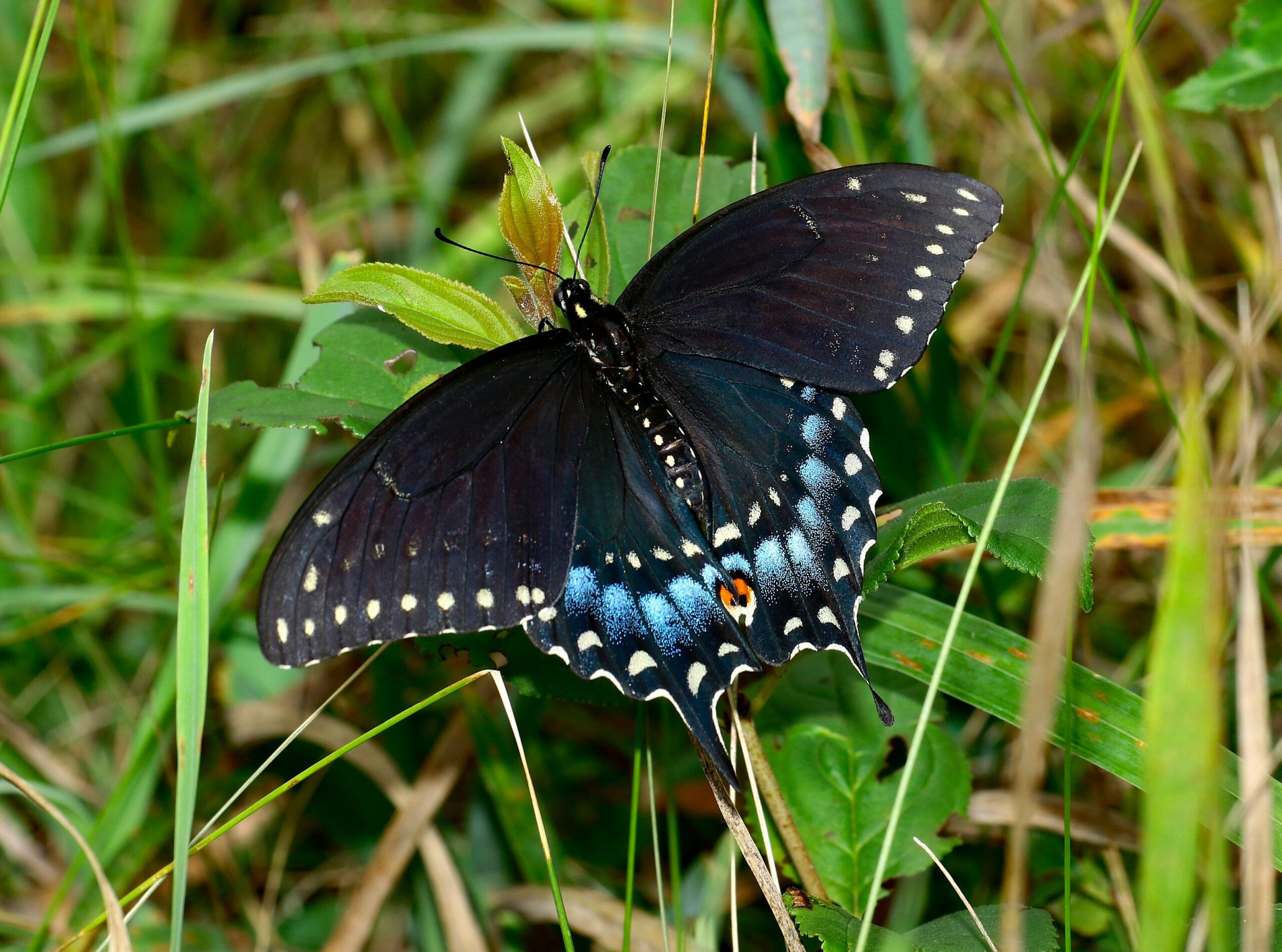
9. Black Swallowtail
The black swallowtail is a backyard favorite because it often uses common herb-garden plants as host plants. Adults are black with yellow markings, blue accents, and orange eyespots near the tails. Caterpillars feed on plants in the carrot family, including dill, parsley, fennel, and native relatives such as golden alexanders. Gardeners sometimes mistake the caterpillars for pests, but they are exactly what you want if your goal is butterflies. Garden tip: Plant extra dill or parsley. One patch is for the kitchen, and one patch is for the caterpillars.
10. California Dogface
The California dogface is a striking yellow-and-orange butterfly named for the dog-face pattern visible on the male’s wings. It is strongly associated with California and is the state butterfly. This species is more region-specific than monarchs or swallowtails, but it deserves a place on any list of beautiful North American butterflies. Its caterpillars use false indigo and related plants. Garden tip: Regional butterfly gardening matters. The best host plant in Tennessee may not be the best host plant in California, Arizona, Florida, or Ontario.
How to Attract Beautiful Butterflies to Your Yard
If you want more butterflies, do not rely only on colorful flowers. Adult butterflies need nectar, but caterpillars need host plants. A garden with nectar but no host plants is more like a rest stop than a true butterfly habitat. For a fuller step-by-step plan, see our guide on how to start a butterfly garden.
Plant both nectar plants and host plants
Nectar plants feed adult butterflies. Host plants feed caterpillars. A strong butterfly garden includes both.
- Milkweed for monarchs
- Pawpaw for zebra swallowtails
- Pipevine for pipevine swallowtails
- Dill, parsley, fennel, and golden alexanders for black swallowtails
- Violets for fritillaries
- Willow, cherry, serviceberry, birch, and tulip tree for several woodland butterflies
Use native plants whenever possible
Native plants are usually better matched to native butterflies. They also support bees, moths, birds, and other wildlife. Choose plants suited to your region rather than copying a generic butterfly garden list from another climate.
Keep flowers blooming through the season
Butterflies need nectar from spring through fall. Early bloomers help newly active adults. Summer flowers support breeding season. Fall flowers are especially important for migrating species such as monarchs. Good choices include native milkweeds, asters, goldenrod, coneflower, blazing star, Joe-Pye weed, ironweed, bee balm, mountain mint, and verbena, depending on your region.
Avoid pesticides
Pesticides can kill butterflies, caterpillars, and the insects that birds depend on. Even products marketed as natural or organic can harm caterpillars if sprayed directly on host plants. If your goal is a butterfly garden, accept some chewed leaves.
Provide sun, shelter, and water
Butterflies are cold-blooded and often bask in sunny areas. They also need shelter from wind and predators. A mix of sunny flowers, shrubs, small trees, and natural edges creates better habitat than a flat, exposed flower bed.
Final Thoughts
The most beautiful butterflies in North America are more than colorful visitors. They are signs of a living landscape. A yard with monarchs, swallowtails, fritillaries, mourning cloaks, and red-spotted purples is usually a yard with native plants, fewer pesticides, and enough habitat to support the full butterfly life cycle. Start with flowers if you want quick color. Add host plants if you want butterflies to return year after year. Helpful resources: Visit the North American Butterfly Association checklist, the Xerces Society native plant lists, and the U.S. Forest Service monarch migration guide for more detailed butterfly and habitat information.<h2>How to Attract Beautiful Butterflies to Your Yard</h2>
<p>If you want more butterflies, do not rely only on colorful flowers. Adult butterflies need nectar, but caterpillars need host plants. A garden with nectar but no host plants is more like a rest stop than a true butterfly habitat. For a fuller step-by-step plan, see our guide on <a href=”https://www.butterfliesbirdsandblooms.com/how-to-start-a-butterfly-garden/”>how to start a butterfly garden</a>.</p>
Share this article


Join the discussion
Sign in to join the discussion
Comments are open to BBB members. Sign in to your free account to share your experience, ask questions, and reply to other readers.
Free to join. No credit card. Founding Member badge for the first 500 spots.