


Some flowers look great at the garden center but barely get a second glance from bees or butterflies. The best flowers for attracting both butterflies and bees are usually the simpler ones: blooms with open centers, easy landing spots, and plenty of nectar or pollen. Coneflowers, milkweed, bee balm, zinnias, black-eyed Susans, asters, goldenrod, salvia, coreopsis, Joe-Pye weed, sedum, sunflowers, lantana, verbena, and native wildflowers are all strong choices. But the plant list is only part of it. You’ll get far more activity if you plant flowers in groups, keep something blooming from spring through fall, and avoid overly fancy double blooms that make it hard for pollinators to feed. If you are building a new garden from scratch, start with our guide on how to start a butterfly garden. Then use the flowers below to turn that garden into a stronger food source for both butterflies and bees.
Quick List: Best Flowers for Butterflies and Bees
- Coneflowers for summer nectar, pollen, and easy landing pads
- Milkweed for monarch butterflies, bees, and other beneficial insects
- Bee balm for bees, butterflies, and hummingbirds
- Zinnias for easy annual color and steady summer visits
- Black-eyed Susans for heat-tolerant blooms and bee activity
- Asters for late-season nectar and pollen
- Goldenrod for fall pollinators when many flowers are fading
- Salvia for bees, butterflies, and hummingbirds
- Coreopsis for long-lasting sunny blooms
- Joe-Pye weed for tall, dramatic butterfly and bee activity
- Sedum for late-summer and fall pollinator feeding
- Sunflowers for bees, butterflies, and seed-eating birds later in the season
- Lantana for heat-loving butterfly activity all summer
- Verbena for airy height and steady bee and butterfly visits
- Native wildflowers for the strongest all-around pollinator habitat
Best Flowers for Attracting Both Butterflies and Bees
| Flower | Best For | Bloom Time | Sun Needs | Why It Works |
|---|---|---|---|---|
| Coneflower | Butterflies, bees, birds | Summer to fall | Full sun | Open petals and pollen-rich centers make feeding easy. |
| Milkweed | Monarchs, bees, butterflies | Summer | Full sun | Provides nectar and serves as the host plant for monarch caterpillars. |
| Bee Balm | Bees, butterflies, hummingbirds | Summer | Full sun to part sun | Clustered blooms make it easy for pollinators to feed. |
| Zinnia | Butterflies, bees | Summer to frost | Full sun | Single and semi-double blooms offer long-lasting nectar access. |
| Black-Eyed Susan | Bees, butterflies | Summer to fall | Full sun | Handles heat and gives bees a visible central target. |
| Aster | Late-season bees and butterflies | Late summer to fall | Full sun to part sun | Feeds pollinators when many summer flowers are finished. |
| Goldenrod | Bees, butterflies, beneficial insects | Late summer to fall | Full sun | One of the strongest late-season pollinator plants. |
| Salvia | Bees, butterflies, hummingbirds | Spring to fall, depending on type | Full sun | Flower spikes provide repeated nectar visits. |
| Coreopsis | Bees, small butterflies | Summer | Full sun | Easy, bright, long-blooming flowers for sunny spots. |
| Joe-Pye Weed | Large butterflies, bees | Late summer | Full sun to part sun | Large flower clusters attract many pollinators at once. |
| Sedum | Bees, butterflies | Late summer to fall | Full sun | Flat flower heads are easy landing pads late in the season. |
| Sunflower | Bees, butterflies, birds | Summer to fall | Full sun | Feeds pollinators first, then birds if seed heads are left standing. |
| Lantana | Butterflies, bees | Summer to frost | Full sun | Heat-tolerant clusters that keep producing nectar in the hottest weeks. |
| Verbena | Butterflies, bees | Summer to frost | Full sun | Airy height that adds nectar without crowding a bed. |
| Native Wildflowers | Bees, butterflies, caterpillars, birds | Varies by species | Varies by species | Adapted to local pollinators; supports the most visitors. |
1. Coneflowers
Purple coneflower is the classic, but pink, white, yellow, orange, and red varieties are all available now if you want something less predictable. What matters more than color is shape: stick to single or semi-double blooms. The big fluffy double varieties look impressive on the tag, but bees and butterflies often can’t get to the center — all those extra petals are in the way. A wide, flat landing pad with an exposed pollen-rich center is what actually gets used.
Coneflowers hold up well through summer heat and don’t sulk in an average bed. They’re also one of the better crossover plants if you want butterflies, bees, and backyard birds out of the same bed — leave the seed heads standing into fall and birds may work them for seed.

From the Garden
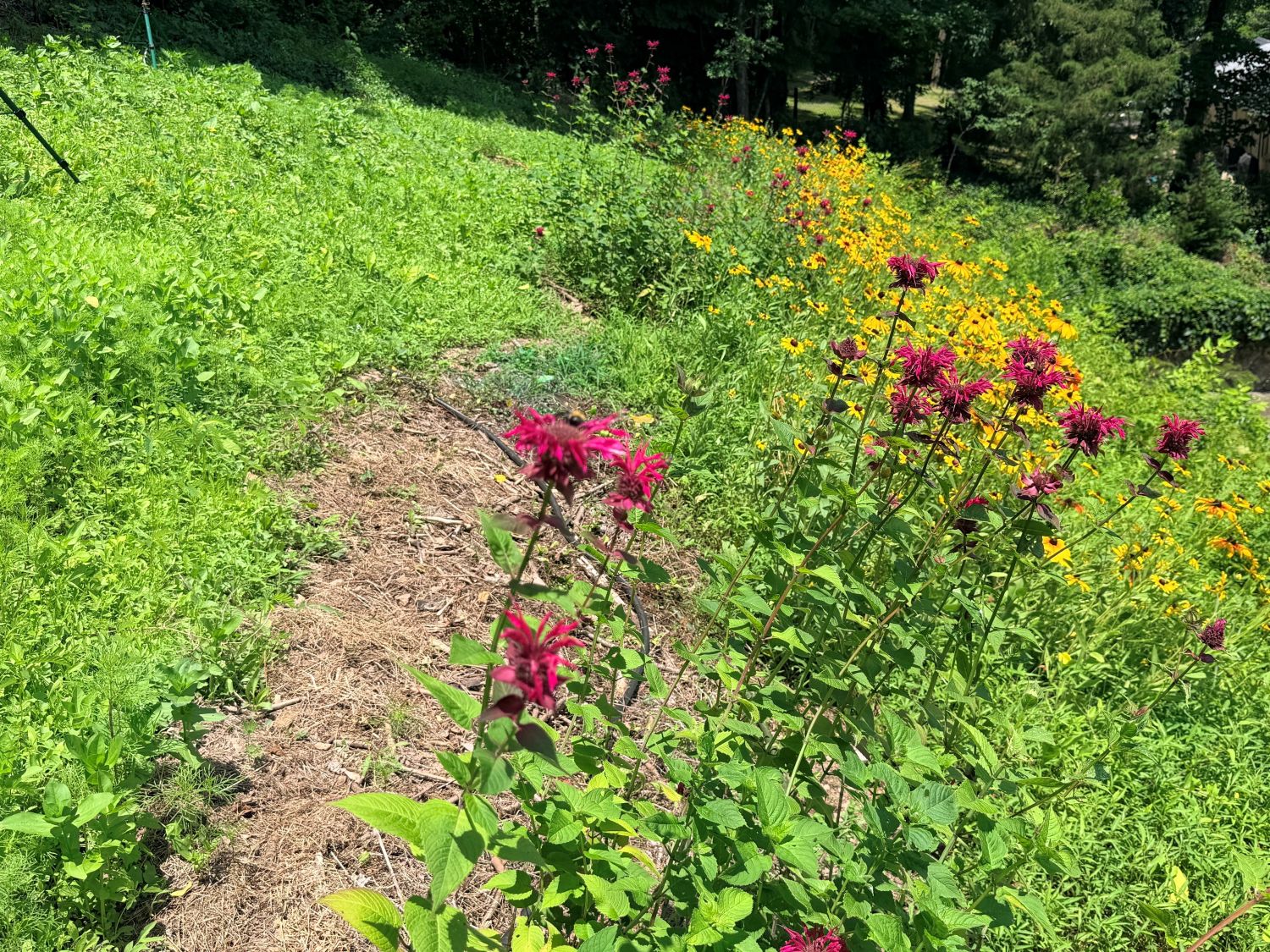
I planted coneflowers on a hillside expecting them to hold their own. Year one, they did — full, healthy blooms. By year two, the weedy grasses that had been sitting quietly underneath took the hill back. I hadn’t weeded or given them any real protection because I wanted the slope to look “natural.” Turns out natural usually means whichever plant is toughest wins, and on a hillside that’s the grass, not the wildflower.
If you want a hillside planting to hold, you’ll need to weed it or give the coneflowers a head start with some kind of barrier — don’t count on them to out-compete established grass on their own. For more growing advice, read our full guide on how to grow coneflowers.
2. Milkweed
Milkweed isn’t optional if monarch butterflies are the goal. Adult monarchs will sip nectar from plenty of flowers, but the caterpillars eat one thing: milkweed leaves. No milkweed, no monarch reproduction in your yard — just occasional visitors passing through.
It’s also useful beyond monarchs. The flower clusters draw bees, other butterflies, beetles, and beneficial wasps. Common milkweed, swamp milkweed, and butterfly weed all work, but they behave differently:
- Common milkweed spreads aggressively — give it room or expect to manage it.
- Swamp milkweed prefers moist soil, good for rain garden edges.
- Butterfly weed handles sun and dry soil, bright orange flowers.
From the Garden
Last year, my milkweed was covered in caterpillars — proof the plants were actually doing their job, not just sitting there as decoration.
Don’t plant a single milkweed and expect it to hold up. If monarch caterpillars find it, they can strip a small plant in days. Plant several together, or spread small clusters across a few sunny spots so no single plant takes the full hit. For more help, see how to attract monarch butterflies and why monarch butterfly habitat loss matters.
3. Bee Balm
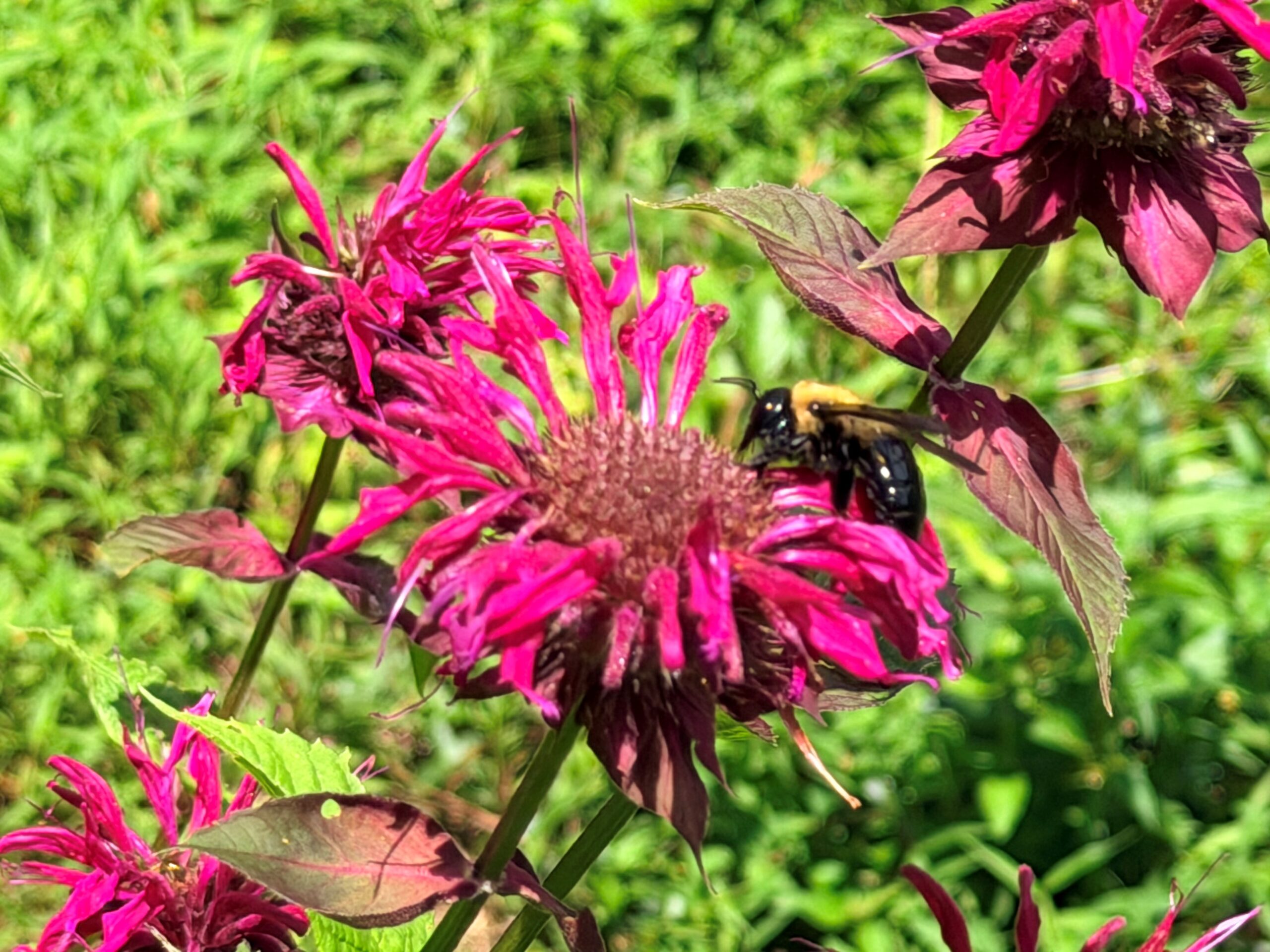
Bee balm makes a pollinator garden look busy. Bees work the flowers steadily, butterflies stop by, and hummingbirds often check it too. The shaggy, slightly wild-looking blooms come in red, pink, purple, and lavender.
Plant it in sun with good airflow. The main risk is powdery mildew, especially in humid climates or when plants are crowded. Look for mildew-resistant varieties and give plants real spacing rather than packing them tight.
From the Garden
My bee balm is one of the biggest bee draws in the whole garden — all kinds and sizes work it. The first few years it was a hummingbird magnet too, though I’ve noticed fewer hummingbirds visiting this year. I’ve got a few solid mounds now and plan to split them this fall to start new groups elsewhere in the yard.
Bee balm spreads by shallow roots and will wander over time. That’s usually fine in a loose pollinator bed, but think twice before putting it in a tight, formal border. Dividing established mounds every few years — typically in fall — keeps plants vigorous and is an easy way to expand your patch without buying more.
4. Zinnias
Zinnias are the easy win for a pollinator garden. They grow fast from seed, bloom for months, and keep bees and butterflies coming when the rest of summer’s flowers start to fade.
Stick to single or semi-double varieties with visible centers. Dense double zinnias still get some visits, but they’re not nearly as useful — same issue as double coneflowers, the extra petals get in the way of the nectar.
Zinnias are especially good for filling gaps in a new garden while perennials are still small. Sow them in open sunny spots, keep them watered while they establish, and deadhead faded blooms to keep new flowers coming through the season.
5. Black-Eyed Susans
Black-eyed Susans handle heat and average soil better than most flowers that get sold as “showy,” which is why they keep working when fussier plants sulk. Bees are drawn to the dark centers, and butterflies visit for nectar.
They pair well in a sunny border with coneflowers, milkweed, bee balm, native grasses, and asters. They also reseed readily and can spread further than expected in their second year.
From the Garden
I seeded black-eyed Susans on the hill behind our house last year, and they came back very strong this year — almost too strong. I’ve got a big section that’s now solid yellow because I didn’t plant anything alongside them. Next time I’ll mix in other bloomers from the start instead of letting one flower take over the whole slope.
If you’re planting from seed, plan your companions at the same time rather than after — black-eyed Susans fill in fast, and an empty gap left “for later” often becomes their territory instead.
6. Asters
Asters earn their keep at the end of the season, when many summer flowers are finished but bees and butterflies are still active. The small daisy-like blooms are easy for bees to work and give butterflies a late nectar source.
Asters are especially strong paired with goldenrod — the purple and yellow combination looks good, and more importantly gives pollinators a serious late-season food patch. Pinch plants back in early summer if they tend to flop; it encourages shorter, bushier growth with more flowers.
7. Goldenrod
Goldenrod gets blamed for fall allergies it doesn’t cause — ragweed, with its airborne pollen, is the usual culprit. Goldenrod’s pollen is heavier and moves mostly by insect contact, not through the air.
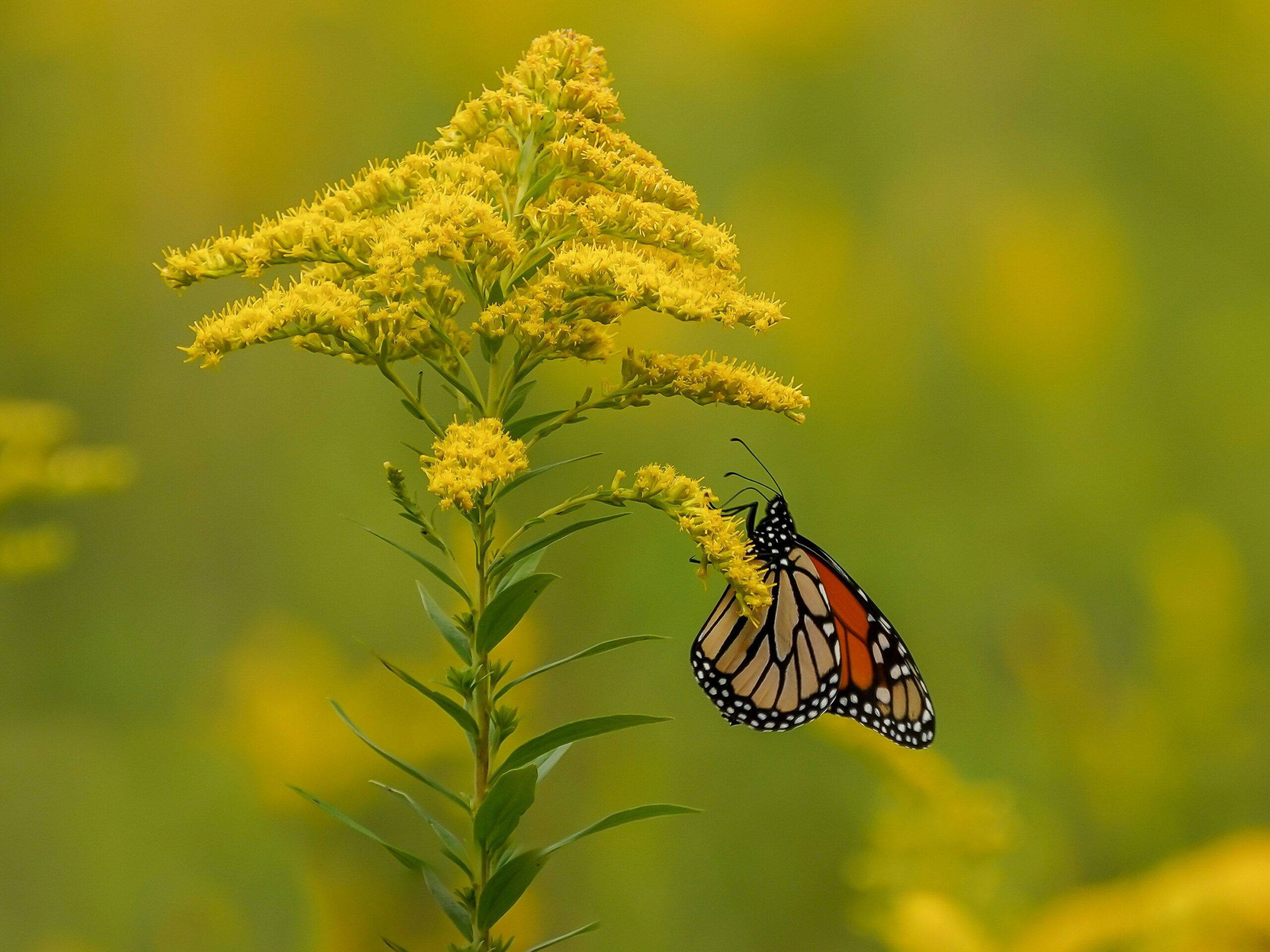
It’s one of the strongest fall plants in a pollinator garden: bees, butterflies, beneficial wasps, and beetles all use it, and it blooms late, right when pollinators are preparing for migration or winter. Some varieties spread aggressively, so match the plant to the space — a wilder edge or back border can handle an aggressive spreader, while a small front bed calls for a compact variety.
8. Salvia
Salvia brings upright flower spikes instead of round blooms, and bees return to them repeatedly. Butterflies visit too, and hummingbirds often show real interest in red or purple varieties.
Check the label before buying — perennial types return each year in the right zone, while annual salvias work well in containers or borders for quick color. Most want full sun and well-drained soil, and established plants are fairly drought-tolerant. Cut back spent spikes to encourage more bloom.
9. Coreopsis
Coreopsis, also called tickseed, is a reliable sunny-garden plant for bees and smaller butterflies. Many varieties bloom for weeks without much fuss, and the open flower form makes nectar easy to reach.
Deadheading extends the bloom window. For more on when and how to cut back flowers, see our guide on how to deadhead flowers the right way.
10. Joe-Pye Weed
Joe-Pye weed is tall and bold, better suited to the back of a border, a rain garden, or a naturalized area than a tidy front bed. That size is exactly why pollinators find it — the large flower clusters draw several insects at once, including bees and larger butterflies.
If you have the room, it adds height and late-summer nectar most gardens are missing. Compact varieties exist for smaller spaces, but even those need room to stand up without being crowded.
11. Sedum
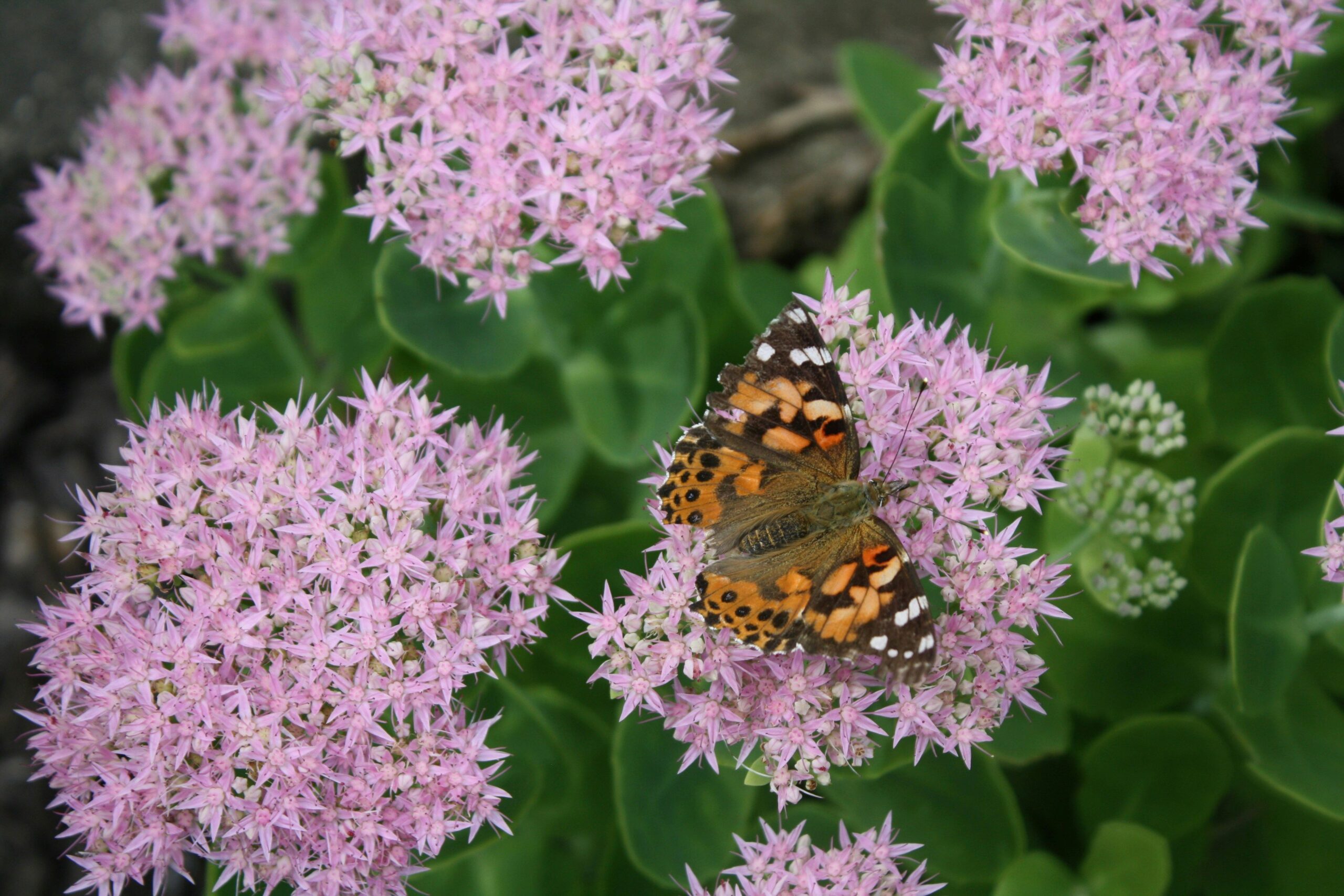
Sedum stays quiet most of the season, then becomes one of the most visited plants in the garden once the flat flower heads open in late summer or fall. It’s drought-tolerant, sturdy, and low-maintenance, and the flat clusters make easy landing pads for butterflies and easy grazing for bees.
Leave the dried flower heads standing after bloom — they add structure through fall and winter instead of leaving bare stems.
12. Sunflowers
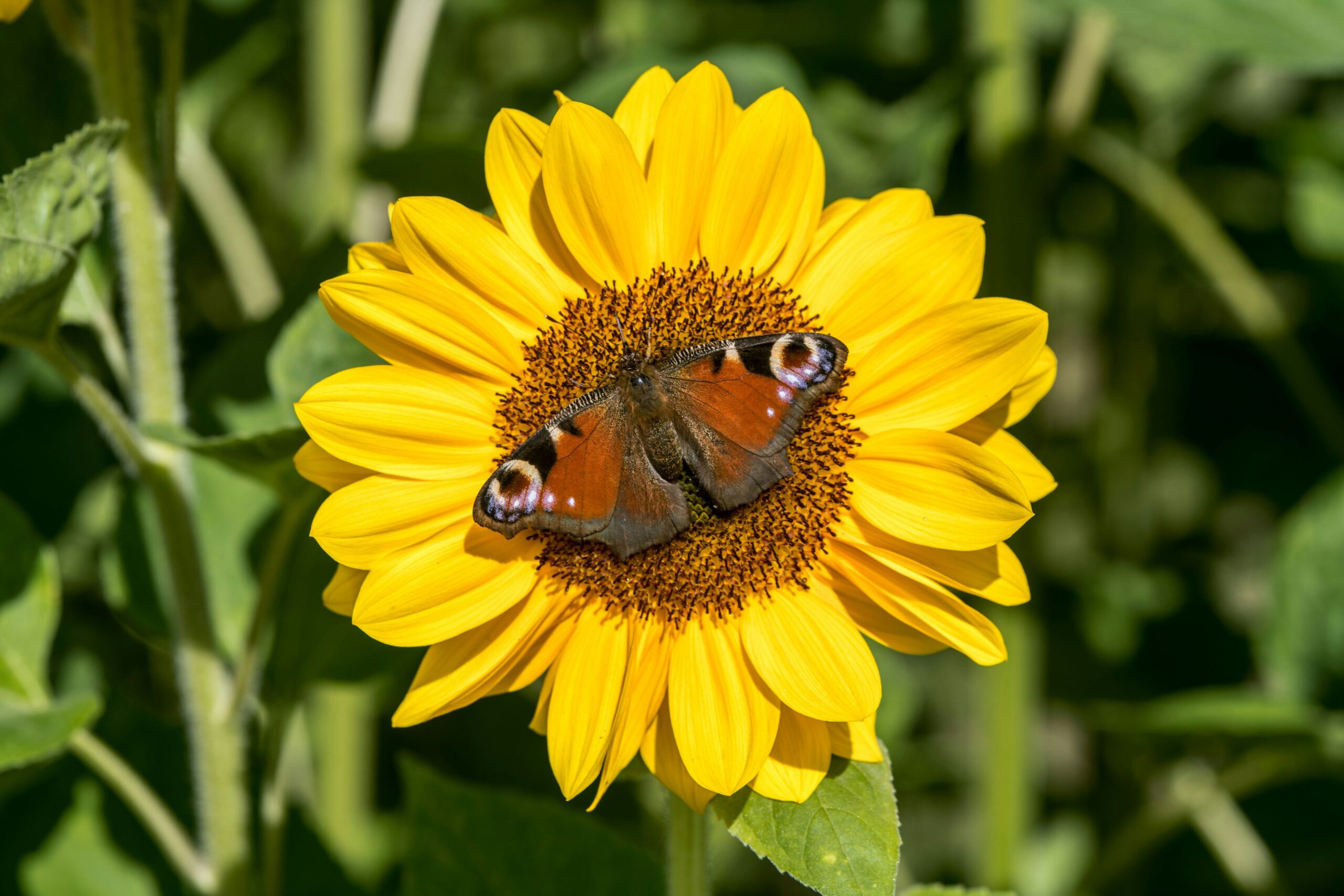
Bees visit sunflower centers for pollen and nectar, butterflies stop by, and birds can feed from the seed heads later if you leave them standing. One catch: some varieties are bred pollenless for the cut-flower trade, which is fine for a vase but nearly useless to bees.
If pollinators are the goal, choose pollen-producing varieties and plant them in groups — easier for pollinators to find, and better-looking in the bed too.
13. Lantana
Lantana is a heat-loving butterfly favorite, and bees work the flower clusters too. It holds up well in hot, sunny containers and dry spots where softer plants struggle.
In colder regions it’s usually grown as an annual; in warm climates it can behave like a perennial shrub. Check whether lantana is considered invasive in your area before planting it in the ground — where it is, a container or a native alternative is the safer choice.
14. Verbena
Tall verbena earns a spot in a mixed border because the airy stems rise above other plants without blocking what’s behind them. Butterflies notice the flowers readily, and bees visit them too.
In a smaller garden, verbena adds height without the bulk of a shrub or large perennial. Some types reseed — welcome in a relaxed garden, less so in a tightly controlled one.
15. Native Wildflowers
Native wildflowers should be part of the plan, not an afterthought. The best choices depend on your region, but strong options often include coneflowers, milkweed, asters, goldenrod, bee balm, blazing star, mountain mint, penstemon, native sunflowers, phlox, and coreopsis.
The USDA Forest Service recommends a wide variety of plants blooming from early spring into late fall, planted in clumps, favoring natives over modern doubled hybrids. The Xerces Society also publishes regional pollinator-friendly plant lists worth checking for your area. For more, see our guide to the best native wildflowers for a pollinator garden.
How to Make These Flowers Work Better
A pollinator garden isn’t just a shopping list — how you plant matters almost as much as what you plant.
Plant in clumps
One coneflower, one zinnia, and one milkweed scattered around the yard won’t perform like a visible patch. Plant three, five, or seven of the same flower together where you can — pollinators find clumps faster and feed more efficiently.
Keep something blooming all season
Bees and butterflies need food across the growing season, not just during one big summer show.
- Spring: phlox, penstemon, columbine, early salvia, flowering shrubs
- Summer: coneflowers, milkweed, bee balm, zinnias, black-eyed Susans, coreopsis
- Late summer and fall: asters, goldenrod, sedum, Joe-Pye weed, sunflowers
Choose simple flowers over overly fancy ones
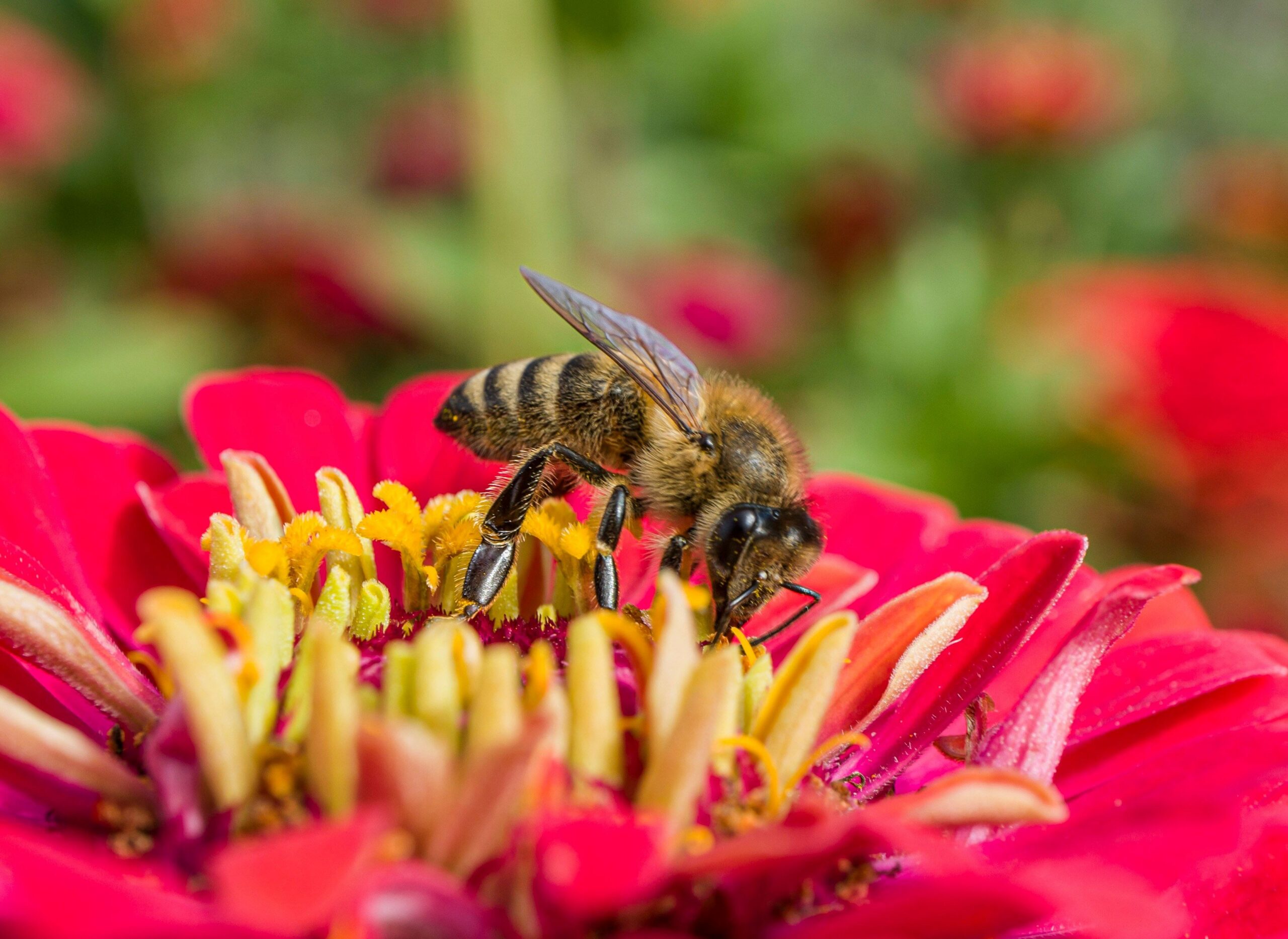
Double flowers can be beautiful, but many are poor performers for bees and butterflies — the extra petals often block access to nectar and pollen. A visible center is usually a good sign.
Use fewer pesticides
Pesticides can harm the same insects you’re trying to attract. If pest control is necessary, avoid spraying open blooms and use the least disruptive method available. A more diverse, resilient garden with beneficial insects is a better long-term fix.
Add water and shelter
Flowers bring pollinators in, but habitat keeps the garden useful. Add a shallow water source, leave some stems standing over winter, keep a few leaf-litter areas, and avoid making every inch of soil bare. See water sources for wildlife for more.
Best Flower Combinations for a Bee and Butterfly Garden
Use one of these combinations as a starting plan instead of buying whatever looks good at the nursery.
Easy Sunny Pollinator Bed
- Coneflower
- Bee balm
- Black-eyed Susan
- Coreopsis
- Aster
- Goldenrod
Summer color, fall food, and a natural look without turning messy.
Monarch-Friendly Butterfly and Bee Garden
- Milkweed
- Zinnias
- Coneflowers
- Bee balm
- Asters
- Goldenrod
Gives monarchs host plants and nectar sources while still feeding bees and other pollinators.
Low-Maintenance Hot-Sun Pollinator Patch
- Black-eyed Susan
- Coreopsis
- Sedum
- Salvia
- Zinnias
- Sunflowers
Good for a sunny spot that runs hot and dry. Water new plants until established, then let the tougher perennials carry the bed. For more warm-season options, see our guide to the best annuals for a summer pollinator garden.
What Not to Plant If Pollinators Are the Goal
Not every flower that looks good to people does anything for pollinators.
- Skip heavily doubled flowers where the center is hidden or inaccessible.
- Watch for pollenless varieties, especially sunflowers bred for cut-flower arrangements.
- Avoid invasive plants that can escape into natural areas.
- Don’t rely only on annuals if long-term habitat is the goal.
- Don’t plant only summer bloomers and leave pollinators hungry in spring and fall.
A pollinator garden doesn’t need to look wild or neglected to function — but a flower that gives nothing back to bees, butterflies, birds, or beneficial insects shouldn’t dominate the bed.
Why Bees and Butterflies May Still Ignore Your Flowers
A new garden often just needs time — pollinators have to find it. But a few practical issues are common causes of a quiet bed:
- Plants scattered too thin instead of clumped
- Mostly double or low-nectar varieties
- No water source nearby
- Pesticide use nearby
- Gaps in bloom across the season
- Nectar plants present, but no butterfly host plants
Host plants matter if butterflies are the main goal — adult butterflies visit nectar flowers, but caterpillars need specific host plants to feed on. Milkweed for monarchs is the best-known example, but many species have their own requirements. See our guide to the most beautiful butterflies in North America, and once they arrive, how to photograph butterflies in your garden.
FAQ: Flowers That Attract Bees and Butterflies
What flower attracts the most butterflies and bees?
Coneflowers, milkweed, bee balm, zinnias, asters, goldenrod, and black-eyed Susans are consistently among the best performers. Native, simple-blooming varieties generally outperform highly bred ornamentals.
Are double flowers bad for pollinators?
Often, yes — the extra petals can block access to nectar and pollen. Choose open-centered varieties where pollinators are the priority.
Should I plant milkweed for butterflies?
Yes, especially for monarchs. Milkweed is the only host plant monarch caterpillars can eat — without it, monarchs may visit for nectar but can’t reproduce in the garden.
Are native flowers better for bees and butterflies?
Generally — native flowers are adapted to local pollinators and tend to support more of the food web, including caterpillars, native bees, and birds.
Final Takeaway
The best flowers for bees and butterflies aren’t always the showiest ones on the nursery bench. I’ve learned that the plants that actually get used are usually the ones with open centers, easy landing spots, and simple blooms pollinators can work without a fight. Start with a reliable mix like coneflowers, milkweed, bee balm, zinnias, black-eyed Susans, asters, and goldenrod. Plant them in groups, keep something blooming from spring through fall, favor natives when you can, and go easy on pesticides. Once the pollinators find the garden, that mix brings the whole space to life.
Share this article

Hi, I’m Andrew — the passionate backyard enthusiast behind Butterflies, Birds & Blooms.
I’m not a biologist, master gardener, or certified expert by any stretch. I’m simply someone who fell in love with the magic that happens right outside my own back door. There’s nothing quite like spotting the first monarch of the season, hearing the cheerful chatter of birds at the feeder, or watching flowers bloom and bring life to the garden.
What started as a personal hobby quickly grew into a desire to share the joy, simple tips, and everyday wonders of creating a backyard that welcomes butterflies, birds, and beautiful blooms. Whether you’re a complete beginner or a seasoned nature lover, this little corner of the internet is for all of us who find peace, wonder, and happiness in our gardens.
You’ll find practical gardening ideas, seasonal observations, canning adventures from the “Bushel Basket,” and plenty of real-life stories from my own yard on a steep hill just outside Nashville. No fancy jargon, no gatekeeping — just genuine love for nature and a community of like-minded folks.
Join me as we learn together, celebrate the small wins, and make our backyards a little more alive with butterflies, birds, and blooms.

Join the discussion
Sign in to join the discussion
Comments are open to BBB members. Sign in to your free account to share your experience, ask questions, and reply to other readers.
Free to join. No credit card. Founding Member badge for the first 500 spots.