

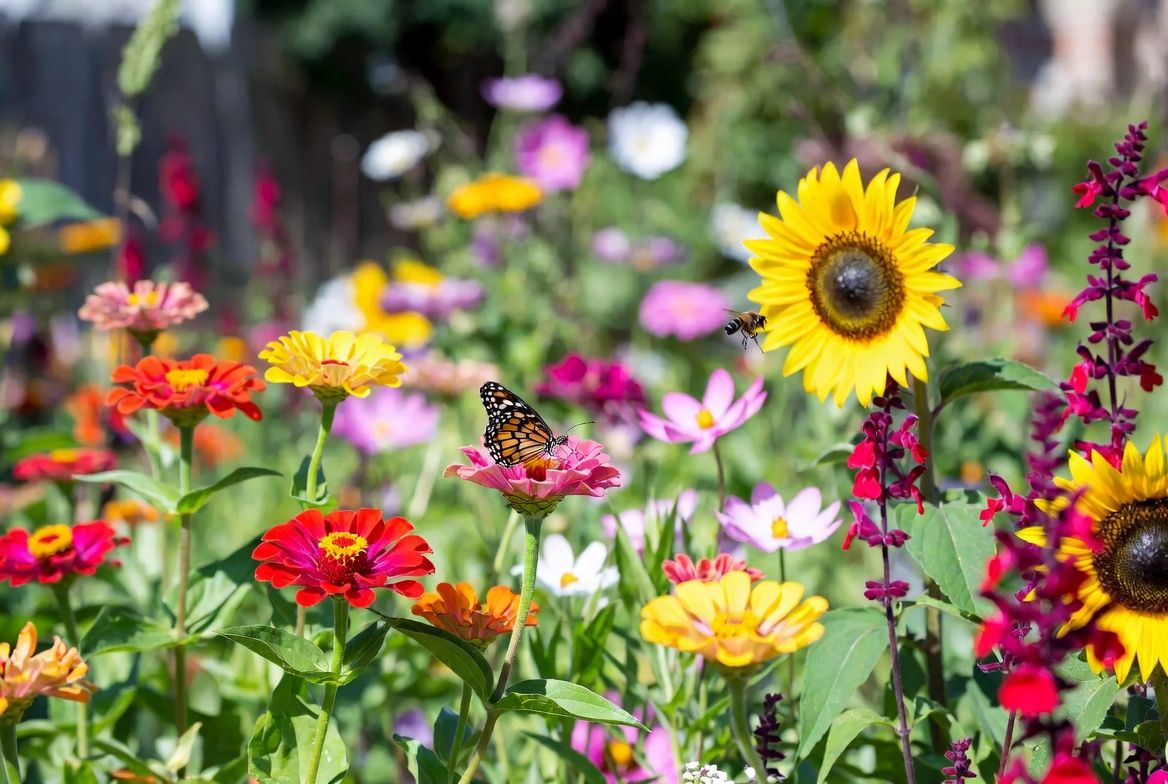

The Best Annuals for a Summer Pollinator Garden
A summer pollinator garden should do more than look colorful from the patio. The best annuals for a summer pollinator garden produce accessible nectar and pollen, bloom for weeks in hot weather, and help fill gaps between spring and fall flowers. Annuals are especially useful when a new garden needs fast color or when perennial plants are still getting established. The important caveat: annual flowers are a supplement, not a complete pollinator habitat. Bees, butterflies, moths, hummingbirds, beetles and beneficial flies also need native host plants, shrubs, trees, nesting areas, water and protection from pesticides. For the strongest backyard habitat, pair annual flowers with regionally native perennials and host plants. The Xerces Society pollinator plant lists are a good place to find plants for your region.
Quick List: Best Annual Flowers for Pollinators
For most sunny summer gardens, start with these pollinator-friendly annuals:
- Zinnias – excellent for butterflies and many bees, especially single and semi-double types.
- Cosmos – easy from seed, airy, long-blooming and accessible to many insects.
- Sunflowers – strong bee plants when you choose pollen-producing varieties.
- Annual salvia – tubular flowers for bees, butterflies and hummingbirds.
- Mexican sunflower – a hot-weather butterfly magnet in full sun.
- Marigolds – useful when flowers are open-centered rather than densely doubled.
- Calendula – cool-season annual that can bloom into early summer and again in fall.
- Borage – blue star-shaped flowers that attract bees.
- Nasturtiums – edible flowers, useful in containers and vegetable gardens.
- Sweet alyssum – low-growing flowers that attract small beneficial insects.
- Pentas – clustered blooms for butterflies and hummingbirds in warm weather.
- Flowering herbs – basil, dill, parsley, cilantro, fennel and thyme when allowed to flower.
What Makes an Annual Good for Pollinators?
Not every pretty annual is useful to pollinators. Some bedding plants have been bred so heavily for color, size or double petals that they offer little accessible pollen or nectar. Michigan State University Extension notes that many annual bedding plants are less attractive to bees than herbs and perennials, although some annuals still provide good summer food. Look for annuals with these traits:

- Open flower centers: Bees, flies and butterflies can reach pollen and nectar more easily.
- Different flower shapes: Open daisies, tubular salvias, clustered pentas and tiny alyssum flowers serve different pollinators.
- Long bloom season: Summer pollinators need steady food, not one short flush of flowers.
- Untreated plants or seeds: Avoid plants treated with systemic insecticides.
- Heat tolerance: Summer annuals need to keep blooming through hot, dry stretches.
For more on flower diversity, Illinois Extension recommends using a range of bloom shapes, colors and seasons so different beneficial insects can use the garden throughout the growing season.
1. Zinnias
Best for: butterflies, bees, beginner gardeners and cut flowers. Zinnias are one of the easiest annual flowers for a sunny pollinator garden. They grow quickly from seed, bloom in summer heat and keep producing flowers if you deadhead them. The University of Minnesota Extension describes zinnias as prolific all-season bloomers that are highly attractive to pollinators, especially butterflies. For pollinators, choose single or semi-double zinnias when possible. Heavily double flowers may look showier, but pollinators often have a harder time reaching the center. Plant zinnias in full sun with good air circulation to reduce powdery mildew. Water at the base of the plant instead of wetting the leaves.
2. Cosmos
Best for: bees, butterflies, low-maintenance flower beds and cottage gardens. Cosmos are forgiving, inexpensive and easy to grow from seed. Their open, daisy-like flowers give pollinators a clear landing pad, and the plants bloom for a long stretch when they are not overfertilized. Too much rich soil can produce tall, leafy cosmos with fewer flowers, so do not overfeed them. Use cosmos toward the middle or back of a sunny border. They mix well with zinnias, sunflowers, verbena, salvia and native perennials. Deadhead to keep plants blooming, or leave some seed heads late in the season for self-sowing and bird interest.
3. Sunflowers
Best for: bees, butterflies, seed-eating birds and children’s gardens. Annual sunflowers are among the most useful summer flowers because they feed pollinators while blooming and birds after the seed heads mature. Choose pollen-producing varieties rather than pollenless cut-flower types if your goal is pollinator value. The University of Minnesota Extension found sunflower varieties among the annual flowers that attracted the most pollinators in a multi-year trial. For small gardens, use branching dwarf sunflowers or varieties that stay 3 to 5 feet tall. For wildlife value, let at least a few flower heads dry on the plant so goldfinches and other birds can feed on the seeds.
4. Annual Salvia
Best for: bees, butterflies, hummingbirds and hot sunny gardens. Annual salvias are strong choices because their tubular blooms serve long-tongued bees, butterflies and hummingbirds. Red salvias are especially noticeable to hummingbirds, while blue and purple salvias are often attractive to bees. Plant salvia in full sun and deadhead or shear lightly if flowering slows. Avoid overwatering. Many salvias handle heat better than softer annual bedding plants, making them useful in midsummer containers and borders.
5. Mexican Sunflower
Best for: butterflies, hot climates, bold color and tall back-of-border planting. Mexican sunflower, also called tithonia, produces vivid orange flowers that attract butterflies in summer. It likes heat, sun and well-drained soil. This is not a quiet little edging plant; it can become large and bushy, so give it room. Use Mexican sunflower where you want height and movement. It pairs well with zinnias, cosmos, tall verbena and ornamental grasses. Deadhead for more flowers, but leave a few seed heads late in the season if you want birds to investigate them.
6. Marigolds
Best for: vegetable gardens, sunny borders, beginner gardeners and beneficial insects. Marigolds are tough, familiar annuals, but the variety matters. For pollinators, choose open-centered marigolds where the flower center is visible. Very dense, pom-pom-style blooms can be less useful because pollinators may not be able to reach the flower parts easily. Use marigolds around vegetable beds, along paths or as a low border in front of taller pollinator annuals. They bloom best in full sun and usually respond well to deadheading.
7. Calendula
Best for: early summer, fall bloom, bees and edible flower gardens. Calendula, sometimes called pot marigold, prefers cooler weather than many summer annuals. In hot climates it may slow down in peak summer, but it can be valuable in spring, early summer and fall. Its open flowers are easy for bees and small beneficial insects to use. Plant calendula from seed in a sunny spot. If plants fade in extreme heat, cut them back lightly and water consistently; they may rebound when temperatures moderate.
8. Borage
Best for: bees, herb gardens and vegetable gardens. Borage produces blue, star-shaped flowers that are especially attractive to bees. It can reseed readily, so place it where a few volunteer seedlings will not be a problem. Borage works well near tomatoes, squash, herbs and other edible crops where bee activity is welcome. Give borage full sun and average soil. The plants can get floppy, so tuck them into a mixed planting rather than using them as a formal border.
9. Nasturtiums
Best for: containers, edible flowers, vegetable beds and trailing color. Nasturtiums are easy annuals with round leaves and bright flowers in yellow, orange, cream and red. They are useful in containers, raised beds and along edges where they can spill over. Their flowers are edible, and they are often grown in vegetable gardens. Nasturtiums generally bloom best in leaner soil. Rich soil can produce lots of leaves and fewer flowers. In very hot climates, give them afternoon shade or grow them in spring and fall.
10. Sweet Alyssum
Best for: small beneficial insects, containers, edging and filling gaps. Sweet alyssum is not dramatic, but it is useful. Its tiny flowers attract small beneficial insects, including hover flies and tiny wasps, and it can soften the front of a bed or the edge of a container. It is also helpful near vegetable gardens because many beneficial insects use small flowers for nectar. Sweet alyssum prefers cooler weather. In hot summer regions, it may perform best in spring and fall or with afternoon shade and steady moisture.
11. Pentas
Best for: butterflies, hummingbirds, containers and hot-weather color. Pentas are grown as annuals in many colder regions and as perennials in warmer climates. Their clustered star-shaped flowers are popular with butterflies and can also attract hummingbirds. They handle heat well when watered consistently. Use pentas in containers, sunny borders or near patios where you can watch pollinators visit. In frost-free areas, check local guidance before planting anything that can persist or spread beyond the garden.
12. Flowering Herbs
Best for: bees, beneficial insects, swallowtail butterflies and edible gardens. Herbs are often more valuable to pollinators than people expect. Basil, cilantro, dill, parsley, fennel, thyme, oregano and mint all attract insects when allowed to flower. Dill, parsley and fennel are especially useful because black swallowtail caterpillars can feed on plants in the carrot family. Do not harvest every herb plant. Let a few bolt and flower. Illinois Extension notes that herbs such as dill, parsley, carrot leaves and thyme can add pollinator habitat, including larval food and adult nectar sources.
Best Annuals by Pollinator Type
| Pollinator | Annuals to Plant | Why They Help |
|---|---|---|
| Butterflies | Zinnias, Mexican sunflower, pentas, cosmos, verbena | Bright colors, flat landing pads and clustered nectar flowers |
| Bees | Sunflowers, borage, zinnias, cosmos, calendula, herbs | Accessible pollen and nectar through summer |
| Hummingbirds | Annual salvia, pentas, nasturtium, cardinal climber | Tubular or nectar-rich flowers suited to long bills |
| Hover flies and tiny beneficial wasps | Sweet alyssum, cilantro flowers, dill flowers, calendula | Small flowers provide nectar for small insects |
| Moths | Four o’clocks, flowering tobacco, moonflower | Pale or evening-opening flowers can support night visitors |
A Simple Summer Pollinator Garden Plan
For a sunny 6-by-8-foot bed, plant annuals in groups rather than scattering one of everything. Pollinators find flowers more easily when the same plant is grouped in a visible patch.
- Back row: 3 to 5 sunflowers or Mexican sunflower plants.
- Middle: 5 to 7 zinnias, 5 cosmos and 3 annual salvias.
- Front edge: sweet alyssum, calendula and compact marigolds.
- Nearby container: pentas, nasturtiums and basil allowed to flower.
If you already have perennials, use annuals to plug bloom gaps. For example, plant zinnias between young coneflowers, cosmos behind black-eyed Susans, or sweet alyssum at the edge of a new native bed.
Container Combination for a Small Pollinator Garden
No yard is required. A large sunny container can still feed pollinators. Use a pot with drainage holes and good-quality potting mix.
- Center: annual salvia or compact sunflower.
- Middle layer: pentas or compact zinnia.
- Edge: nasturtium and sweet alyssum.
- Herb accent: basil, dill or parsley in a second pot.
Containers dry out faster than garden beds, so water regularly and avoid pesticide use. A shallow dish with stones and clean water can also help pollinators, as long as it is refreshed often to prevent mosquitoes.
Annuals Are Not Enough: Add Host Plants Too
Adult butterflies need nectar, but caterpillars need host plants. If you only plant nectar annuals, you may attract adult butterflies without helping them complete their life cycle. The National Wildlife Federation explains that caterpillar food plants are essential for attracting and supporting butterflies. Good host plant additions may include milkweed for monarchs, violets for fritillaries, native grasses for skippers, and parsley-family herbs for black swallowtails. The best choices depend on your region and the butterflies found there.
How to Keep Annuals Blooming All Summer
- Plant in full sun: Most summer annuals need at least 6 hours of sun; zinnias and sunflowers prefer even more.
- Water deeply: Consistent moisture supports nectar production, but soggy soil can harm roots.
- Deadhead selectively: Remove spent blooms on zinnias, cosmos, marigolds and salvia to extend flowering. Leave some sunflower heads for birds.
- Avoid pesticides: Xerces recommends reducing or avoiding pesticides in pollinator habitat and using gentler pest-management methods when needed.
- Buy carefully: Ask nurseries whether plants were grown without systemic insecticides.
- Use compost, not excess fertilizer: Too much nitrogen can create leafy plants with fewer flowers. Learn more about improving soil with backyard composting.
Common Mistakes to Avoid
- Planting only double flowers: They may be decorative but less accessible to pollinators.
- Using pesticide-treated plants: Systemic insecticides can remain in plant tissue, pollen or nectar.
- Planting one of each flower: Groups of the same flower are easier for pollinators to find.
- Ignoring bloom timing: Aim for flowers from spring through frost, not just one midsummer peak.
- Forgetting caterpillars: A true butterfly garden needs host plants, not just nectar flowers.
- Cleaning too aggressively: Some pollinators need leaf litter, bare soil, stems and sheltered areas. A tidy garden can be a poor habitat.
FAQ: Annuals for Summer Pollinator Gardens
Are annuals good for pollinators?
Yes, the right annuals can provide nectar and pollen during summer. However, annuals should be part of a larger habitat that includes native plants, host plants, shrubs, trees, nesting areas and pesticide-free care.
What annual flowers attract the most butterflies?
Zinnias, Mexican sunflower, pentas, cosmos, verbena and annual salvia are strong choices for butterflies. Choose simple, nectar-rich flowers and plant them in groups.
What annual flowers attract bees?
Sunflowers, borage, calendula, zinnias, cosmos, sweet alyssum and flowering herbs are useful bee plants. Bees especially benefit from flowers with accessible pollen and nectar.
Can I grow a pollinator garden in containers?
Yes. Use a large container in full sun and combine annual salvia, compact zinnia, pentas, nasturtium, sweet alyssum and flowering herbs. Keep containers watered and avoid pesticides.
Should I plant native annuals?
When regionally appropriate, yes. Native annuals can be excellent, but availability varies by region. Check local native plant societies, Extension resources or Xerces regional plant lists before choosing seeds.
Final Takeaway
The best annuals for a summer pollinator garden are not always the biggest or brightest flowers at the garden center. Choose annuals with accessible blooms, steady summer flowers and real nectar or pollen value. Start with zinnias, cosmos, sunflowers, annual salvia, Mexican sunflower, marigolds, calendula, borage, nasturtiums, sweet alyssum, pentas and flowering herbs. Then strengthen the garden with native host plants, pesticide-free care and a little less tidiness. That is how a colorful summer flower bed becomes useful pollinator habitat.
Share this article

Hi, I’m Andrew — the passionate backyard enthusiast behind Butterflies, Birds & Blooms.
I’m not a biologist, master gardener, or certified expert by any stretch. I’m simply someone who fell in love with the magic that happens right outside my own back door. There’s nothing quite like spotting the first monarch of the season, hearing the cheerful chatter of birds at the feeder, or watching flowers bloom and bring life to the garden.
What started as a personal hobby quickly grew into a desire to share the joy, simple tips, and everyday wonders of creating a backyard that welcomes butterflies, birds, and beautiful blooms. Whether you’re a complete beginner or a seasoned nature lover, this little corner of the internet is for all of us who find peace, wonder, and happiness in our gardens.
You’ll find practical gardening ideas, seasonal observations, canning adventures from the “Bushel Basket,” and plenty of real-life stories from my own yard on a steep hill just outside Nashville. No fancy jargon, no gatekeeping — just genuine love for nature and a community of like-minded folks.
Join me as we learn together, celebrate the small wins, and make our backyards a little more alive with butterflies, birds, and blooms.

Join the discussion
Sign in to join the discussion
Comments are open to BBB members. Sign in to your free account to share your experience, ask questions, and reply to other readers.
Free to join. No credit card. Founding Member badge for the first 500 spots.