
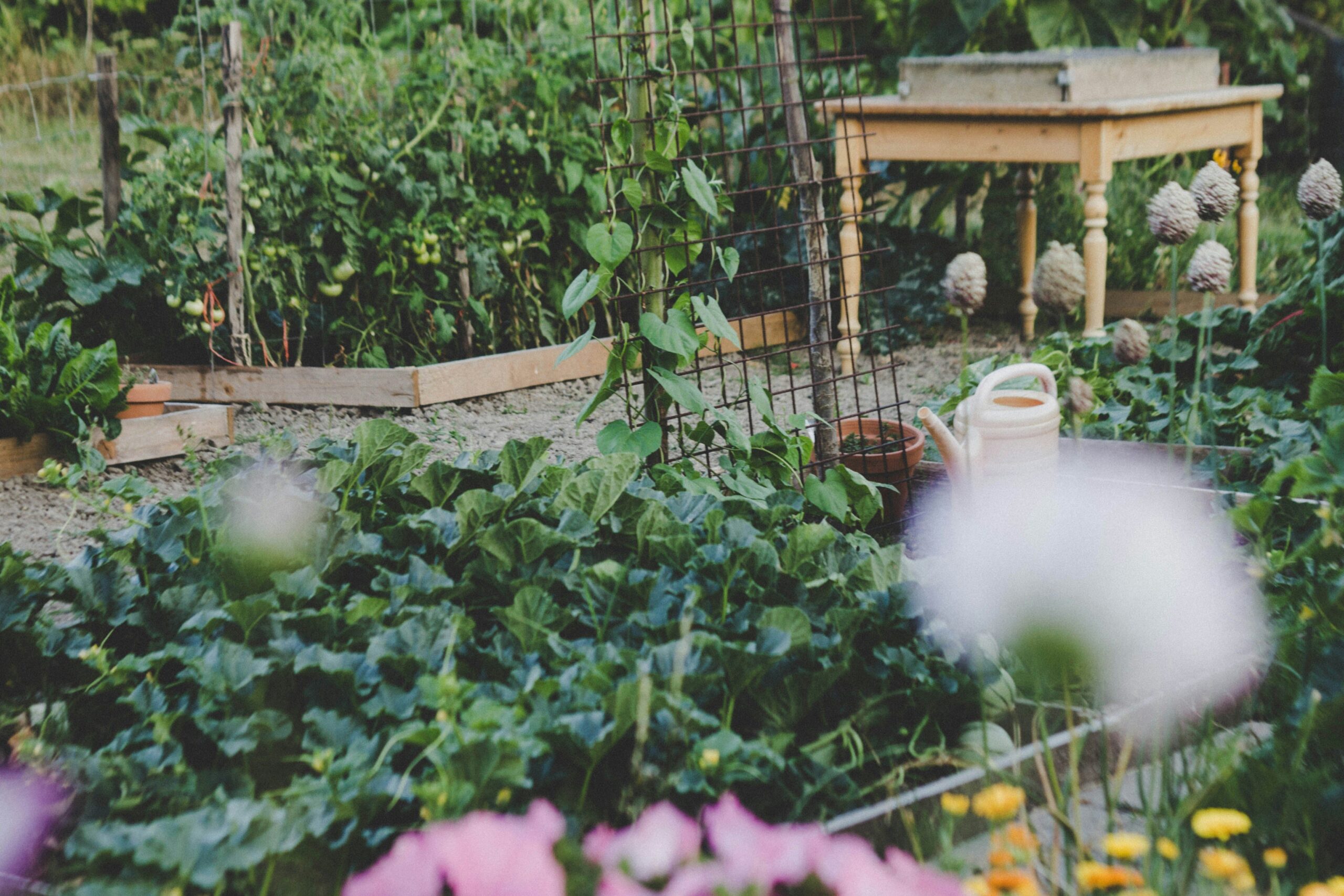

Companion Planting: Which Vegetables Grow Better Together
Companion planting is one of the most useful ideas in backyard vegetable gardening, but it is also one of the most misunderstood. Some plant pairings genuinely help with space, shade, pollination, soil health or pest management. Others are repeated year after year with very little evidence behind them. The best way to use companion planting is not to treat it as garden magic. Think of it as smart garden design. You are placing vegetables, herbs and flowers together so they use space well, attract beneficial insects, reduce pest pressure, support each other physically, or avoid competing for the same resources. Here are the vegetable pairings that make the most sense for home gardeners, plus a few combinations to avoid.
What Is Companion Planting?
Companion planting means growing certain plants near each other because they may benefit one another. In a vegetable garden, those benefits usually fall into a few practical categories:
- Better use of space: Fast-growing crops can grow around slower-growing vegetables before the larger plants need the room.
- Natural shade: Tall plants can protect cool-season crops from harsh afternoon sun.
- Pollinator support: Flowers and herbs can attract bees, butterflies and other pollinators.
- Beneficial insects: Some plants attract lady beetles, lacewings, hoverflies and parasitic wasps that help control pests.
- Soil improvement: Legumes such as beans and peas can add nitrogen to the soil through their relationship with soil bacteria.
- Physical support: Tall crops like corn can support climbing plants such as pole beans.
The key is to match plants by their actual needs: sunlight, water, root depth, growth rate and pest problems.

Best Companion Planting Combinations for Vegetables
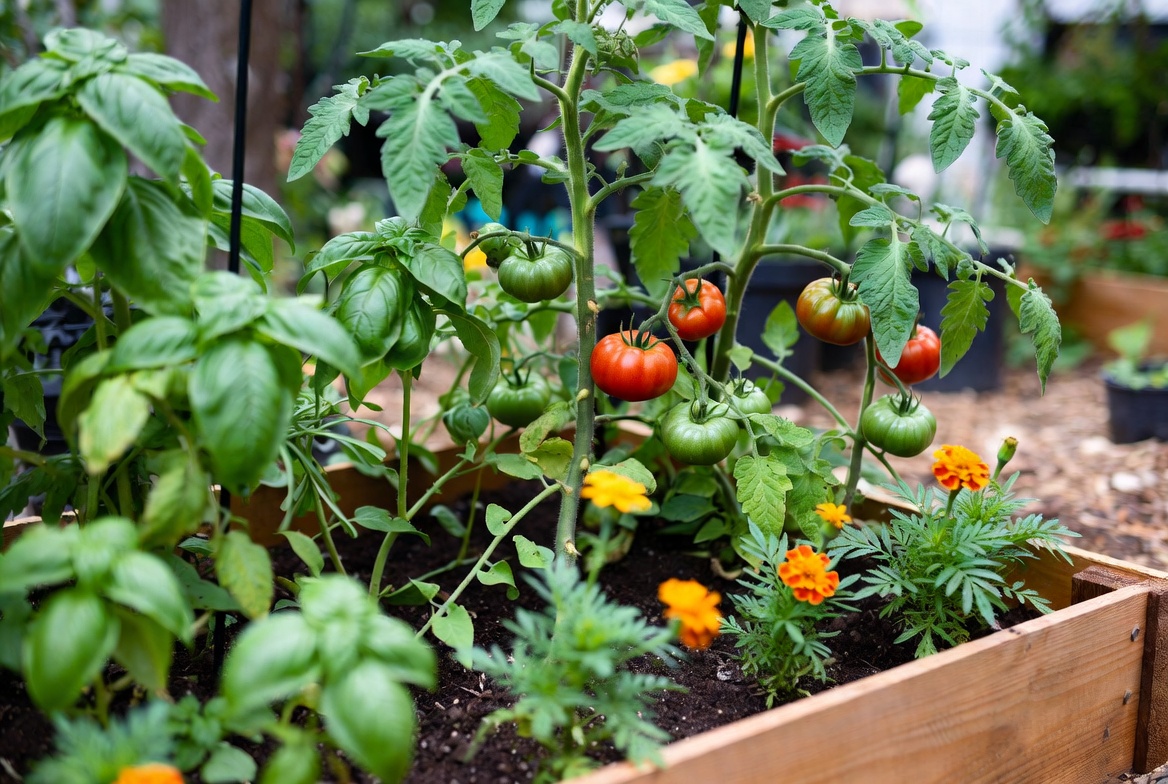
1. Tomatoes with Basil, Marigolds, Lettuce and Carrots
Tomatoes are one of the most popular vegetables for companion planting. They grow tall, need full sun and take several months to produce heavily, which makes them good partners for smaller crops and insect-attracting plants. Good companions for tomatoes include:
- Basil: Basil grows well near tomatoes because it likes similar warm conditions. It may also help attract pollinators when allowed to flower.
- Marigolds: Marigolds are useful around tomatoes because they attract beneficial insects and add color to the vegetable garden.
- Lettuce: Lettuce can grow in the partial shade created by mature tomato plants, especially in warm climates.
- Carrots: Carrots use a different root zone than tomatoes and can fit well in open spaces around young tomato plants.
Avoid planting tomatoes with: potatoes, because both are in the nightshade family and can share some disease and pest problems.
2. Peppers with Basil, Onions, Carrots and Marigolds
Peppers grow well with many of the same companions as tomatoes. They like warm soil, full sun and steady moisture. Because pepper plants do not usually get as large as tomatoes, they can fit easily into mixed vegetable beds. Good companions for peppers include:
- Basil: A compact herb that fits neatly between pepper plants.
- Onions: Onions have upright growth and do not take much space above ground.
- Carrots: Carrots make good use of open soil between pepper plants.
- Marigolds: Marigolds help bring beneficial insects into the garden.
Avoid planting peppers with: fennel, which is generally a poor companion for most vegetables and is better grown separately.
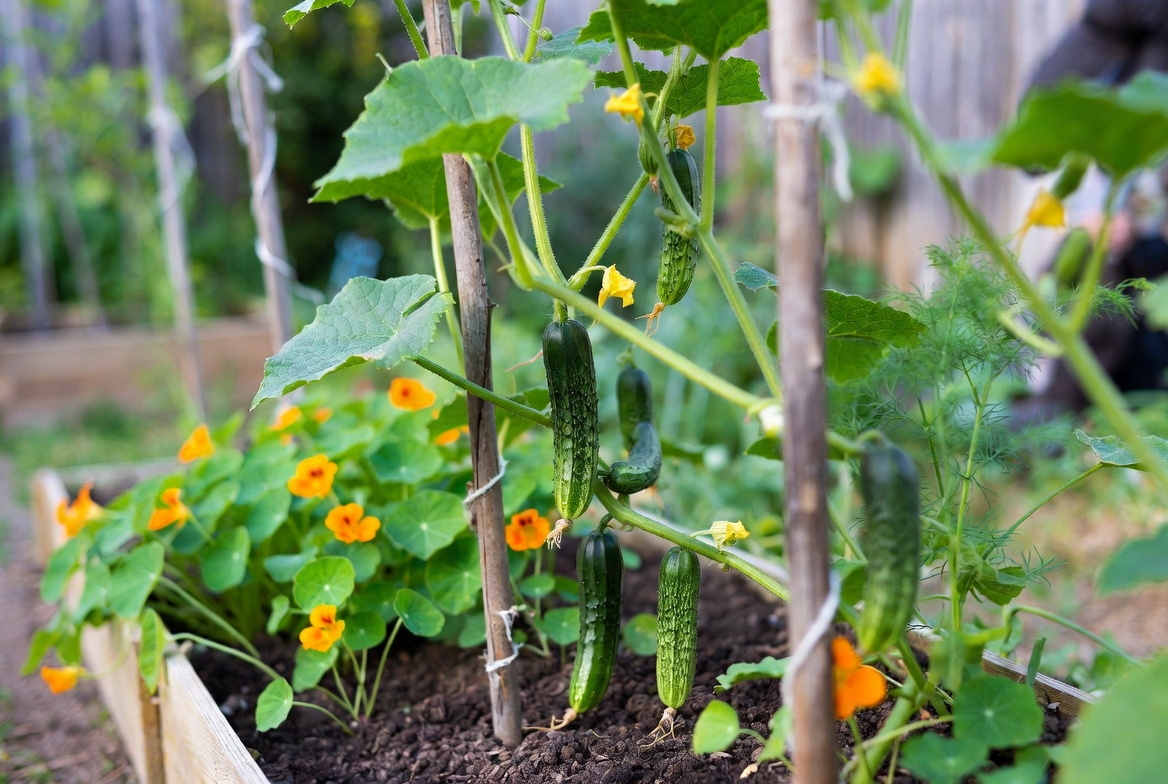
3. Cucumbers with Beans, Peas, Dill, Nasturtiums and Radishes
Cucumbers grow quickly and can take over a bed if they are not trellised. Their best companions either improve the use of space, attract pollinators or help distract pests. Good companions for cucumbers include:
- Beans and peas: These legumes can share trellis space if managed carefully, though they should not be overcrowded.
- Dill: When allowed to flower, dill attracts beneficial insects.
- Nasturtiums: Nasturtiums can act as a trap crop for some pests and also attract pollinators.
- Radishes: Radishes mature quickly and can be harvested before cucumber vines spread.
Avoid planting cucumbers with: potatoes, because both are heavy feeders and may compete for nutrients and water.
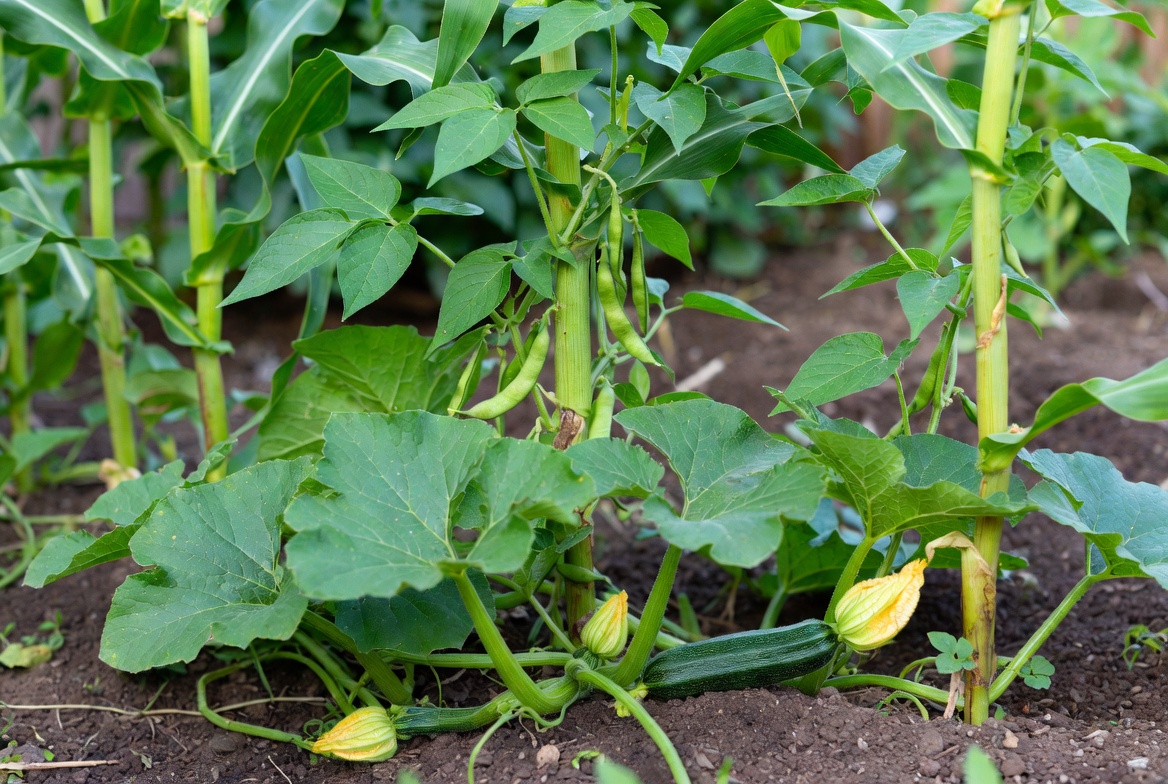
4. Corn with Beans and Squash
The classic “Three Sisters” planting combines corn, pole beans and squash. Each plant plays a role. Corn provides a living support for the beans. Beans are legumes. Squash spreads along the ground, shading soil and helping reduce weeds. Good companions for corn include:
- Pole beans: Beans can climb corn stalks once the corn is sturdy enough.
- Winter squash or pumpkins: Large leaves shade the soil and reduce weed pressure.
- Melons: Like squash, melons can act as a living mulch, though they need space.
This planting works best when the corn is planted first and allowed to gain some height before beans are added. If beans are planted too early, they can overwhelm young corn stalks.
5. Lettuce with Tomatoes, Radishes, Carrots and Cucumbers
Lettuce is a cool-season crop that often struggles when summer heat arrives. Companion planting can help extend the harvest by giving lettuce partial shade from taller vegetables. Good companions for lettuce include:
- Tomatoes: Mature tomato plants can shade lettuce during hot weather.
- Radishes: Radishes grow quickly and fit well between lettuce rows.
- Carrots: Carrots and lettuce use garden space differently and can grow together efficiently.
- Cucumbers on a trellis: Trellised cucumbers can provide light shade without sprawling over the lettuce.
Avoid planting lettuce with: crops that will completely smother it, such as sprawling squash vines planted too closely.
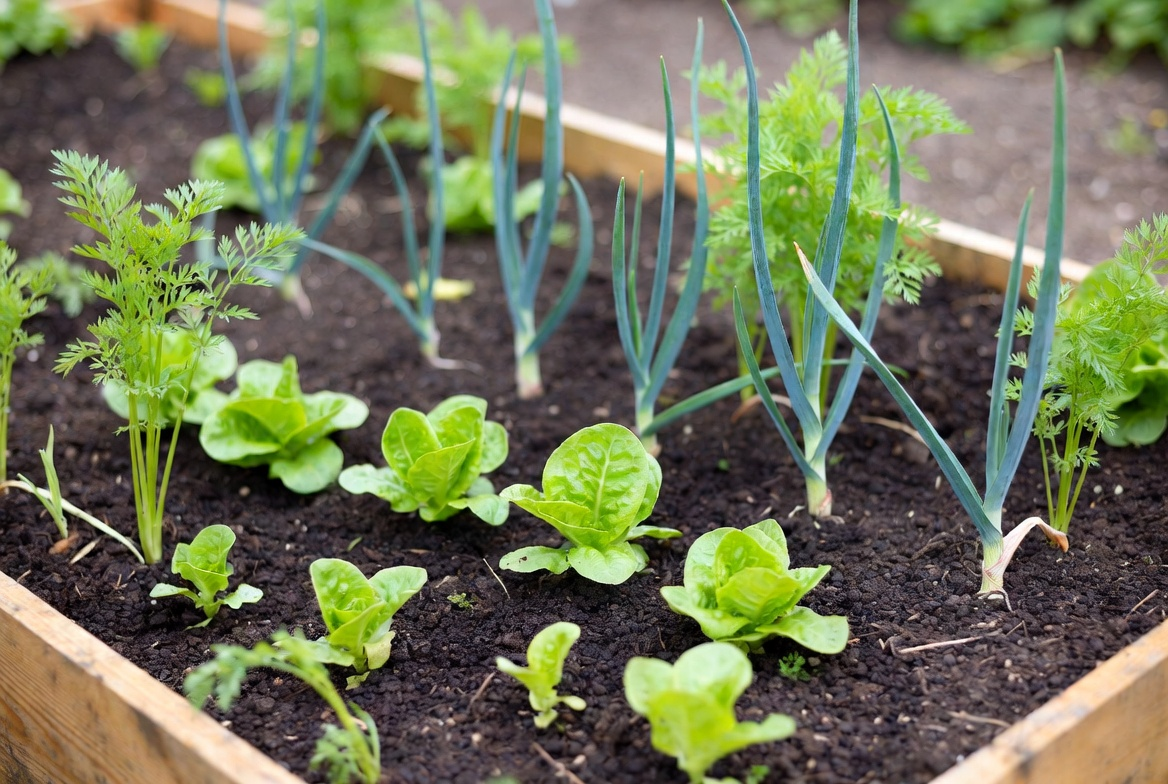
6. Carrots with Onions, Lettuce, Peas and Tomatoes
Carrots are slow to germinate and grow best in loose soil without heavy competition. They pair well with crops that grow upright or mature quickly. Good companions for carrots include:
- Onions: Onions take up little horizontal space and fit well between carrot rows.
- Lettuce: Lettuce has shallow roots and can be harvested before carrots need more room.
- Peas: Peas grow vertically and can help make efficient use of bed space.
- Tomatoes: Carrots can grow around young tomato plants before the tomatoes get large.
Avoid planting carrots with: dense, aggressive plants that shade the soil too heavily before carrots are established.
7. Beans with Corn, Cucumbers, Squash and Radishes
Beans are useful companions because they are legumes and because many varieties grow vertically. Pole beans need a trellis or support, while bush beans stay compact. Good companions for beans include:
- Corn: Pole beans can climb corn in a traditional Three Sisters planting.
- Cucumbers: Both crops can share vertical growing structures if spacing is managed.
- Squash: Squash shades the ground while beans grow upward.
- Radishes: Radishes mature quickly and can be harvested before beans fill in.
Avoid planting beans with: onions, garlic, leeks and chives. Many gardeners keep beans away from alliums because they can compete poorly together.
8. Cabbage, Kale and Broccoli with Dill, Nasturtiums, Onions and Lettuce
Cabbage, kale, broccoli, cauliflower and Brussels sprouts are all brassicas. They are often attacked by cabbage worms, aphids and flea beetles, so companion planting should focus on attracting beneficial insects and improving airflow. Good companions for brassicas include:
- Dill: Flowering dill attracts beneficial insects.
- Nasturtiums: Nasturtiums may help draw some pests away from brassicas.
- Onions: Onions grow upright and fit well around larger brassicas.
- Lettuce: Lettuce can grow between young brassicas before the larger plants spread.
Avoid planting brassicas too closely together year after year. Rotating them helps reduce pest and disease buildup.
Flowers and Herbs That Help a Vegetable Garden
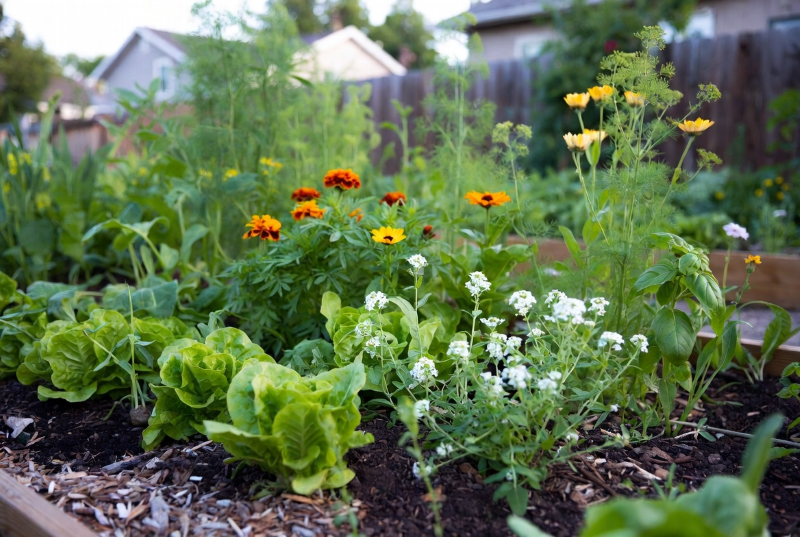
Some of the best companion plants are not vegetables at all. Herbs and flowers can improve a vegetable garden by attracting pollinators and beneficial insects.
Best flowers for companion planting
- Marigolds: Useful around tomatoes, peppers and brassicas for beneficial insect activity and garden color.
- Nasturtiums: Helpful near cucumbers, squash and cabbage-family crops.
- Calendula: Attracts pollinators and beneficial insects.
- Sweet alyssum: A low-growing flower that attracts small beneficial insects.
- Zinnias: Excellent for pollinators and butterflies near vegetable beds.
Best herbs for companion planting
- Basil: Good near tomatoes and peppers.
- Dill: Excellent for attracting beneficial insects when it flowers.
- Parsley: Attracts pollinators and supports swallowtail butterfly caterpillars.
- Cilantro: Flowers attract small beneficial insects.
- Chives: Compact, easy to grow and useful around many vegetables.
For more pollinator-friendly flower ideas, see our guide to the best annuals for a summer pollinator garden.
Vegetables You Should Usually Keep Apart
Companion planting is not only about what grows well together. It is also about avoiding combinations that increase competition or disease risk.
Tomatoes and Potatoes
Tomatoes and potatoes are both nightshades. They can share some pest and disease problems, so it is better to separate them and rotate where they are planted each year.
Beans and Onions
Beans are usually best kept away from onions, garlic, leeks and chives. This is a common garden separation because beans and alliums often do not perform well together.
Fennel and Most Vegetables
Fennel is not a friendly neighbor in most vegetable gardens. Grow it in its own area or container instead of mixing it into vegetable beds.
Heavy Feeders Packed Too Closely Together
Tomatoes, corn, squash, cucumbers and cabbage-family crops all need good fertility. Planting too many heavy feeders in one small bed can lead to weak growth unless the soil is rich and watering is consistent.
Simple Companion Planting Chart
| Vegetable | Good Companions | Avoid Planting Near |
|---|---|---|
| Tomatoes | Basil, marigolds, lettuce, carrots | Potatoes |
| Peppers | Basil, onions, carrots, marigolds | Fennel |
| Cucumbers | Beans, peas, dill, nasturtiums, radishes | Potatoes |
| Corn | Beans, squash, pumpkins, melons | Tomatoes in crowded beds |
| Lettuce | Tomatoes, radishes, carrots, cucumbers | Large sprawling squash planted too close |
| Carrots | Onions, lettuce, peas, tomatoes | Dense, fast-shading crops |
| Beans | Corn, cucumbers, squash, radishes | Onions, garlic, leeks, chives |
| Cabbage, Kale, Broccoli | Dill, nasturtiums, onions, lettuce | Other brassicas in the same spot every year |
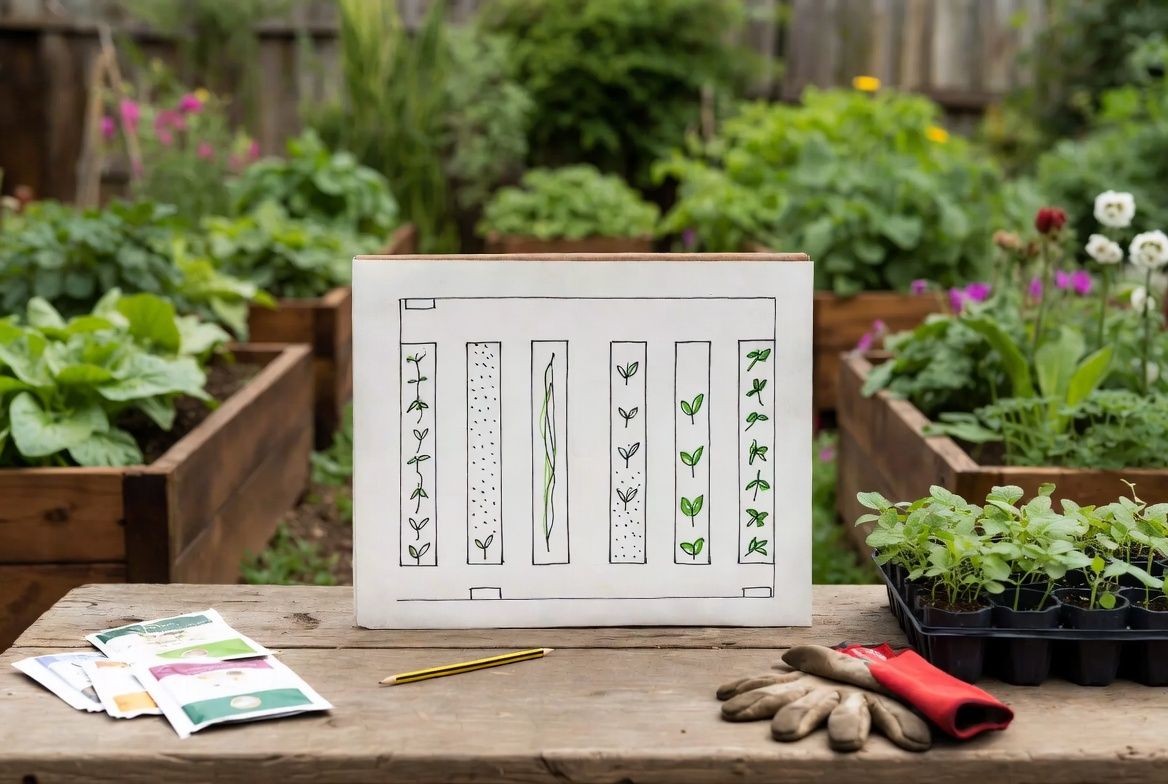
How to Plan a Companion-Planted Vegetable Garden
Before planting, think less about “likes and dislikes” and more about how each plant grows. Ask these questions:
- Will one plant shade another too much?
- Do both plants need the same nutrients at the same time?
- Do they have similar water needs?
- Will one plant sprawl over the other?
- Can one crop be harvested before the other needs more room?
- Does the pairing attract pollinators or beneficial insects?
A strong companion planting plan might look like this:
- Tomatoes on a trellis with basil and marigolds around the edge.
- Lettuce tucked where it gets afternoon shade from taller plants.
- Cucumbers grown vertically with nasturtiums nearby.
- Carrots planted between onions or along the edge of pepper plants.
- Dill, calendula and sweet alyssum placed throughout the garden to support beneficial insects.
Don’t Forget Soil Health
Companion planting helps, but it cannot replace healthy soil. Vegetables still need good compost, consistent watering, enough sunlight and proper spacing. If your soil is poor, crowded or dry, companion planting will not fix the problem. Adding compost is one of the best ways to improve a vegetable garden before planting. If you are new to composting, read our beginner’s guide to backyard composting.
Final Thoughts
Companion planting works best when it is practical. Pair vegetables that use space differently, support pollinators, attract beneficial insects or mature at different times. Be skeptical of claims that one plant will magically repel every pest or dramatically increase every harvest. The smartest vegetable gardens are diverse, well-spaced and planned with plant needs in mind. Start with a few reliable pairings, watch what happens in your own yard, and adjust each season. That is how companion planting becomes useful instead of just another gardening myth. Helpful external resources: Learn more from University of Minnesota Extension, Virginia Tech Extension, and Cornell Cooperative Extension.
Share this article


Join the discussion
Sign in to join the discussion
Comments are open to BBB members. Sign in to your free account to share your experience, ask questions, and reply to other readers.
Free to join. No credit card. Founding Member badge for the first 500 spots.